


.jpg)
.jpg)
.jpg)
.jpg)


.svg)


.svg)
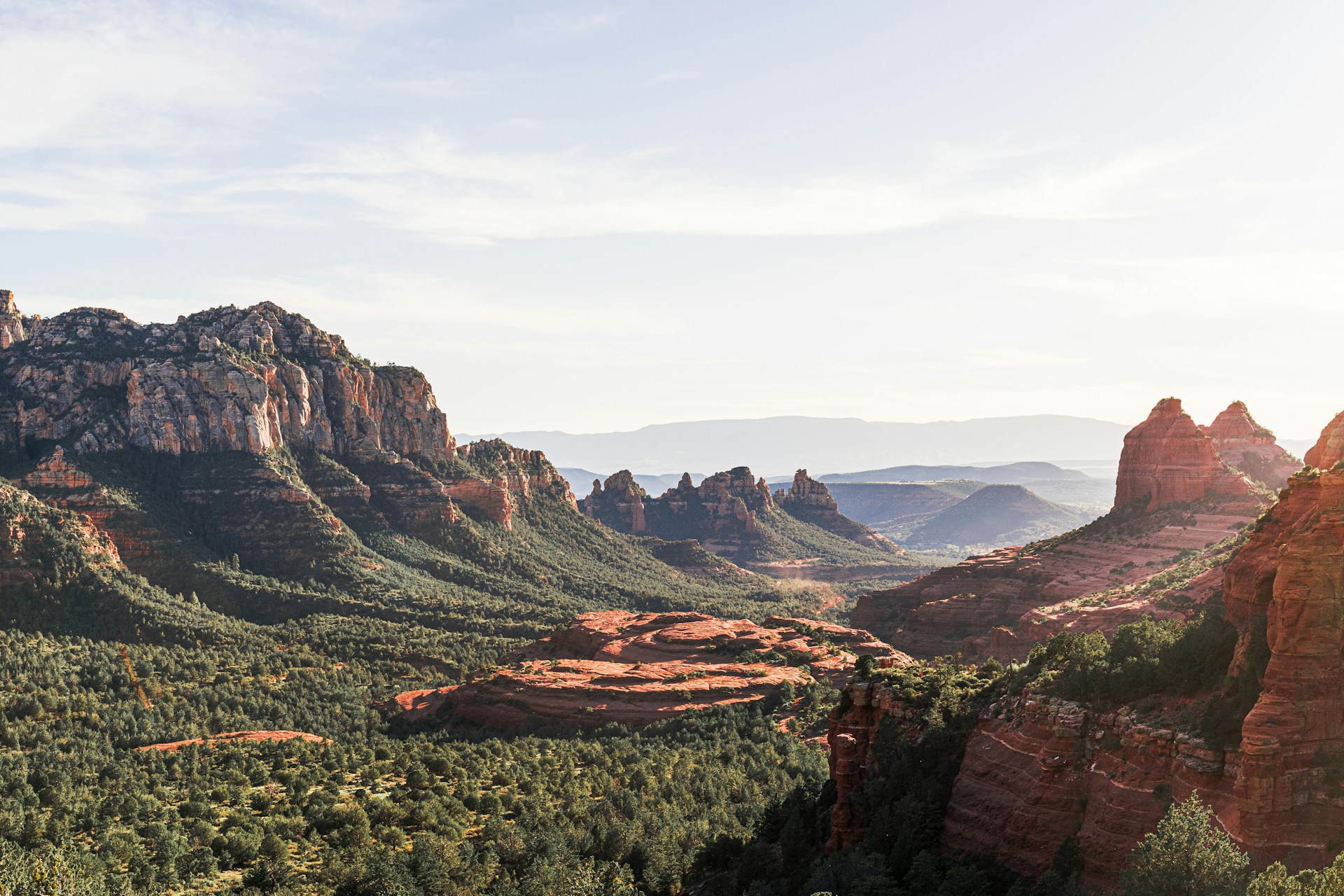
In 2026, voters must choose between Hobb’s pragmatism and Bigg’s Trump-aligned vision for the state. With water running low, costs rising, and public safety decreasing, Arizona’s future may be on the line.
Article content
Arizona’s 2026 gubernatorial election is a choice between two fundamentally different visions for the state. Democratic governor Katie Hobbs presents herself as a pragmatic governor willing to work across party lines to address Arizona’s most pressing issues (“Katie Hobbs”). Republican challenger Andy Biggs offers a more explicitly conservative alternative that closely aligns with President Donald Trump and the national Republican agenda (Johnson). Both candidates promise to make Arizona safer, more affordable, and better prepared for the future. However, the question Arizona voters should ask is not just which candidate has the stronger ideology—after all, the candidates are merely a reflection of their party—but the approach most likely to solve Arizona’s uniquely AZ problems.
On that question, Hobbs has the stronger argument.
Governing a state requires compromise, even when compromise is politically inconvenient. Arizona has a Republican-controlled Legislature (“State Partisan Compsition”), yet Hobbs has repeatedly sought bipartisan agreements to satisfy both powers (Priest). She remains a strong defender of reproductive health care and has signed a legislation repealing Arizona’s pre-Roe abortion ban after the Arizona Supreme Court’s decision made that law enforceable again (“Governor Katie Hobbs Signs Bill into Law Officially Repealing 1864 Abortion Ban”). Her administration has also emphasized public education, workforce development, and assistance for families struggling with housing and other costs.
But perhaps the clearest example of why Arizona needs pragmatic leadership is water.
Water is not a Republican or Democratic issue; it is a matter of survival in a desert state experiencing rapid population growth. Arizona’s groundwater challenges are particularly serious in rural communities, where excessive pumping can threaten wells and agricultural livelihoods. Hobbs established a Water Policy Council to examine reforms to the state’s groundwater system and subsequently helped broker legislation creating the Ag-to-Urban Groundwater Conservation program, projected to conserve millions of acres-feet of water over its lifetime while allowing economic development to continue (“Committees”). Protecting Arizona’s water while recognizing the state’s need for growth is precisely the kind of balancing act a governor should perform.
Biggs offers a different philosophy. His campaign emphasizes lower taxes, reduced government regulation, aggressive border enforcement, school choice, expanded production, and “election integrity.” Among these legitimate policy priorities, particularly persuasive to Arizona’s voters are his border policies. Arizona is a border state, and residents understandably expect their governor to take public safety seriously. Biggs promises to work with President Trump and local law enforcement to "completely secure” the southern border and combat drug trafficking (“On The Issues”), while Hobbs has also invested in border enforcement and public safety. The disagreement, therefore, is primarily about how aggressively Arizona should align itself with the national immigration agenda (“Governor Hobbs Announces $17 Million for Border Security”).
Arizona’s governor is not the president, though. The governor’s responsibility is to address Arizona’s schools, roads, water supplies, economy, public safety, and state government. A candidate can be strongly conservative without making national partisan battles the centerpiece of state government.
As one of President Trump’s most prominent congressional allies, Biggs has supported efforts to challenge the certification of the 2020 presidential election results (“Endorsements”). His current campaign emphasizes election integrity and promises legislation to ensure only eligible citizens participate in Arizona elections (Meyer). Biggs also selected former Arizona state senator and dairy farmer Sine Kerr (Billeaud and Cooper), whose rural background and conservative reinforce his campaign’s emphasis on agriculture, water, and traditional Republican priorities.
On the other hand, Hobbs selected John Giles, the former Republican mayor of Mesa who became an independent, as her running mate (Billeaud and Cooper). Giles has publicly criticized Trump and openly supported Democratic candidates, making the choice an unmistakable attempt to appeal to the blue citizens. Hobbs and Giles are essentially arguing that Arizona’s political divisions require coalition-building, whereas Biggs and Kerr are presenting an ideologically cohesive union.
Most importantly, though, Arizona faces many problems that do not care whether voters are Republican, Democrat, or independent. A dried-up well does not vote Republican. A struggling family does not become rich overnight because a politician wins an argument. A classroom does not rise in rankings just because a new governor is sworn in. In an era when national politics increasingly reward confrontation, Arizona should remember that the governor’s job is simply to help the state thrive. For Arizona’s future, pragmatism is the ultimate sign of leadership.
Acknowledgement
The Institute for Youth in Policy wishes to acknowledge Donna Kim for editing this op-ed.
Works Cited
Billeaud, Jacques, and Jonathan J. Cooper. “Democratic Arizona Gov. Katie Hobbs chooses former GOP Mayor John Giles as running mate.” PBS, 11 August 2026, https://www.pbs.org/newshour/politics/democratic-arizona-gov-katie-hobbs-chooses-former-gop-mayor-john-giles-as-running-mate. Accessed 1 September 2026.
“Committees.” Arizona Department of Water Resources, https://www.azwater.gov/gpwc/committees. Accessed 1 September 2026.
“Endorsements.” Biggs for Arizona, https://biggsforarizona.com/endorsements/. Accessed 1 September 2026.
“Governor Hobbs Announces $17 Million for Border Security.” Office of the Governor Katie Hobbs, 15 January 2025, https://azgovernor.gov/office-arizona-governor/news/2025/01/governor-hobbs-announces-17-million-border-security. Accessed 1 September 2026.
“Governor Katie Hobbs Signs Bill into Law Officially Repealing 1864 Abortion Ban.” Office of the Governor Katie Hobbs, 2 May 2024, https://azgovernor.gov/office-arizona-governor/news/2024/05/governor-katie-hobbs-signs-bill-law-officially-repealing-1864. Accessed 1 September 2026.
Johnson, Gene. “Democratic Arizona Gov. Katie Hobbs chooses former GOP Mayor John Giles as running mate.” PBS, https://www.pbs.org/newshour/politics/democratic-arizona-gov-katie-hobbs-chooses-former-gop-mayor-john-giles-as-running-mate. Accessed 1 September 2026.
“Katie Hobbs.” Ballotpedia, https://ballotpedia.org/Katie_Hobbs. Accessed 1 September 2026.
Mendez, Edmundo, Jr. “A Scenic View of Mountains and Trees in the Distance.” Unsplash, January 19, 2020. https://unsplash.com/photos/a-scenic-view-of-mountains-and-trees-in-the-distance-dJXZAO9hVjw.
Meyer, Josh. “The Republicans who rejected 2020 election result running for governor.” USA Today, 7 June 2026, https://www.usatoday.com/story/news/politics/elections/2026/06/07/republican-governor-candidates-rejected-2020-election/90261718007/. Accessed 1 September 2026.
“On The Issues.” Biggs for Arizona, https://biggsforarizona.com/issues/. Accessed 1 September 2026.
Priest, Reagan. “Gov. Hobbs looking to 2026 for action on housing, water and education.” Arizona Capitol Times, 19 July 2025, https://azcapitoltimes.com/news/2025/07/19/gov-hobbs-looking-to-2026-for-action-on-housing-water-and-education/. Accessed 1 September 2026.
“State Partisan Compsition.” National Conference of State Legislatures, 27 May 2026, https://www.ncsl.org/about-state-legislatures/state-partisan-composition. Accessed 1 September 2026.

.jpg)
