


.jpg)
.jpg)
.jpg)
.jpg)


.svg)


.svg)
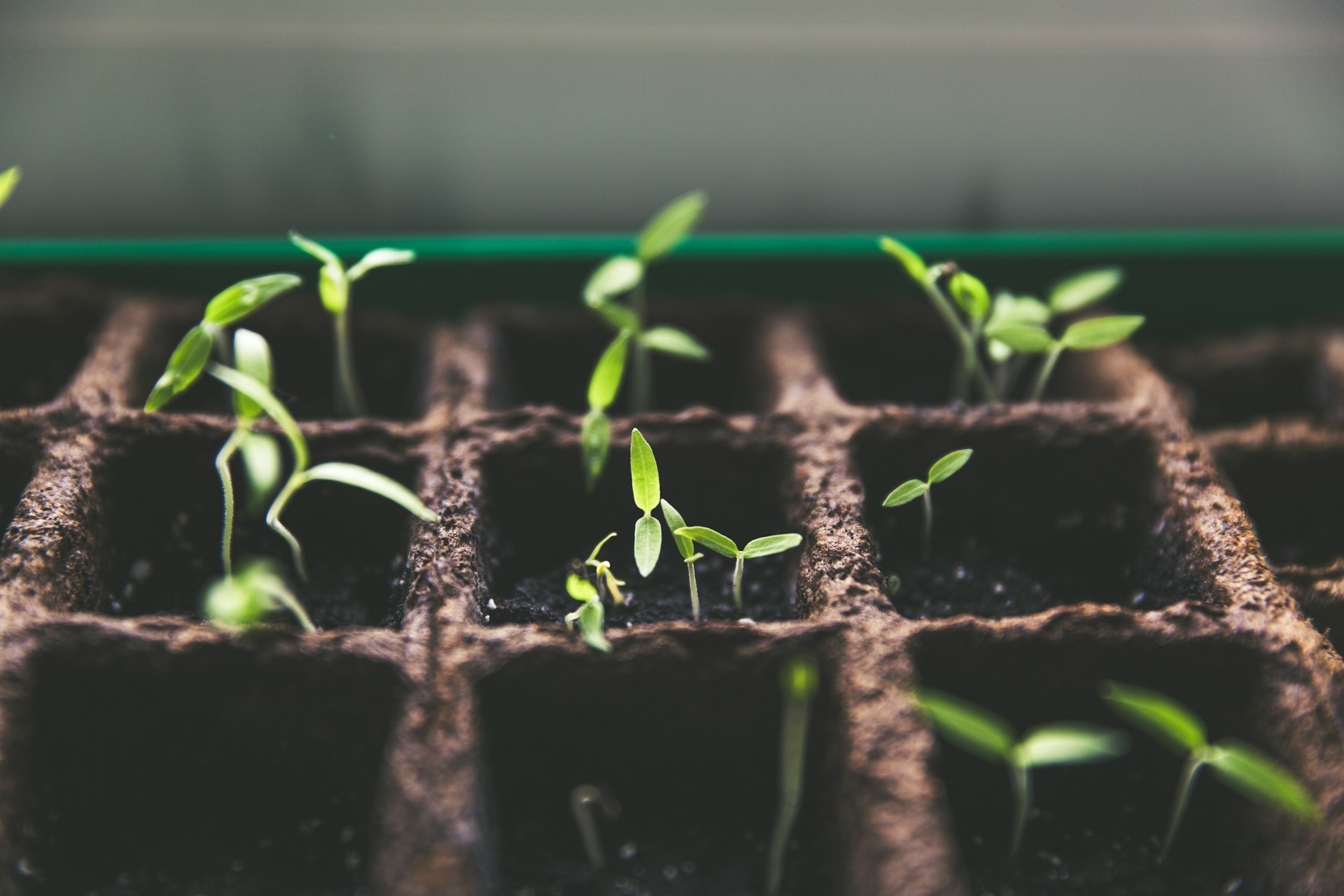
Global conflicts, such as the regional war involving the Gulf states and Russia’s invasion of Ukraine, threaten African food security by causing market volatility and increasing the cost of imported synthetic fertilizers. This insecurity is aggravated by an industrial food system driven by private profit and a "Green Revolution" model that deepens dependency on costly, unsustainable inputs like chemicals and genetically modified seeds. In response, the essay advocates for a shift toward agroecology, which uses restorative practices and locally sourced seeds to build food sovereignty and shield populations from the economic ripples of foreign wars.
Article content
Since submitting to The Institute for Youth in Policy, this piece has also been published on Africa is a Country.
A war fought thousands of miles away may decide whether a farmer in rural Malawi can afford to plant this season. As US-Israel strikes on Iran intensify, drawing neighboring nations into the conflict and disrupting global supply chains, the harm to human life ripples indefinitely. Perhaps the most overlooked are the lives on the periphery––those on the African continent who face the growing danger of deepening food insecurity with every stretch of the war.
Africa’s dependence on the Gulf region for its supply of synthetic fertilizer means we could soon be witnessing a sharp rise in the price of food. While Africa contains more than 60% of the world’s arable land, hunger still remains a pressing injustice, with levels sitting at over 20% according to UN estimates. Many of Africa’s economies remain structured around extractive export-oriented agricultural production, a legacy of colonial extraction on the continent. Today, the input costs of agricultural production form a part of this man-made calamity.
Synthetic fertilizers, for instance, are created by harnessing natural gases, and the import of said fertilizers becomes a costly endeavor in the face of market volatility resulting from regional conflict. Africa primarily depends on the synthetic fertilizer produced and transported from gulf states such as Qatar, Saudi Arabia, and Oman near Iran. Africa also sources fertilizer from Russia, which is embroiled in its own war with Ukraine. With consumption rates of synthetic fertilizer in South Africa, the largest economy on the continent, sitting at just over 1.2 million tons per 6 million hectares per year, this interdependence poses a significant threat to the continent.
Another significant part of the issue lies in the current food systems paradigm, in which commercial farming is driven by profit incentive of the private ownership class, many of them huge conglomerates that hold concentrated control over key resources to food production, such as land and seed. Their profit motive has resulted in the intensification of inputs, the costs of which are passed on to consumers.
La Via Campesina, a global food sovereignty coalition movement, recognizes the harm posed to food sovereignty by corporate interests on current global food systems. They define food sovereignty as the right of all people to food “produced through ecologically sound and sustainable methods, and their right to define their own food and agriculture systems.” Some leaders such as tech billionaire Bill Gates believe that the solution to Africa’s hunger crisis lies in emulating their own “success” through deepening dependence on chemicals, genetically modified seeds that are heavily patented, restricting their use, and monocultural methods, as well as encouraging the financialization of agriculture. However, these solutions fall short of satisfying the benchmark for food sovereignty, trapping African nations in cycles of debt and dependence by exercising coercive control of agriculture on the continent.
Instead, food insecurity can best begin to be addressed by adopting agroecological practices. The agroecology movement offers an alternative to dominant food systems; it is the application of sustainable agroecosystems focused on restorative agricultural practices that draw on indigenous knowledge systems and scientific research. Examples include the use of locally sourced seeds that allows farmers to source and sell their own seed as needed, intercropping and circular systems to encourage soil health and regeneration, and natural fertilizers, to name a few.
But with well-funded national agribusiness, tech-turned agriculture entrepreneurs and multinational conglomerates all with vested interests to contend with, the struggle within African countries to move towards food sovereignty and food security remains under immense threat. While governments still prioritize export orientation and conventional commercial farming, the very people the governments are meant to serve will remain trapped in a global food system that has only perpetuated food insecurity. The ongoing not-so-distant war presents a moment to practice alternatives shown to be viable, lobby governments to use their budgets to provide material support to these sustainable alternatives, increase environmental regulations that support agroecology, and not turn their backs on the millions of people who will be harmed when the effects of war ripple onto their shores.
Acknowledgement
The Institute for Youth in Policy would like to acknowledge Donna Kim for editing this op-ed.
References
Agroecology Coalition. “Can Agroecology Break Dependence on Synthetic Fertilizer?” Accessed April 2, 2026. https://agroecology-coalition.org/can-agroecology-break-dependence-on-synthetic-fertilizer/.
Genetic Literacy Project. “Four Multinational Companies Sell Half of All Seeds Globally, Says USDA Report on Agricultural Consolidation.” March 31, 2023. https://geneticliteracyproject.org/2023/03/31/four-multinational-companies-sell-half-of-all-seeds-globally -says-usda-report-on-agricultural-consolidation/.
Howard, P. and Hendrickson, M. “Updates.” Global Agriculture. Accessed April 2, 2026. https://www.globalagriculture.org/publications/transformation/book/updates/howard-hendrickson/.
La Via Campesina. “What is Food Sovereignty?” Accessed April 2, 2026. https://viacampesina.org/en/what-is-food-sovereignty/.
Office of the High Commissioner for Human Rights (OHCHR). “UN Experts Denounce Aggression in Iran and Lebanon, Warn of Devastating Regional Effects.” March 2026. https://www.ohchr.org/en/press-releases/2026/03/un-experts-denounce-aggression-iran-and-lebanon-warn -devastating-regional.
SA Grain. “Fertiliser Industry in SA: This is What it Looks Like.” September 2, 2025. https://sagrainmag.co.za/2025/09/02/fertiliser-industry-in-sa-this-is-what-it-looks-like/.
ScienceDirect. “Global Food Security: Conflict, Consolidation, and Ecological Transformation.” Accessed April 2, 2026. https://pdf.sciencedirectassets.com/271773/1-s2.0-S0305750X26X20022/1-s2.0-S0305750X26000835/m ain.pdf.
“The Ecological Citizen.” “What is Agroecology?” Accessed April 2, 2026. https://www.ecologicalcitizen.net/what-is.php?t=agroecology-definition.
United Nations Environment Programme (UNEP). “Our Work in Africa.” Accessed April 2, 2026. https://www.unep.org/regions/africa/our-work-africa.
World Economic Forum. “Food Finance and Climate Playbook.” August 2025. https://www.weforum.org/stories/2025/08/food-finance-climate-playbook/.
World Health Organization (WHO). The State of Food Security and Nutrition in the World 2025. Accessed April 2, 2026. https://www.who.int/publications/m/item/the-state-of-food-security-and-nutrition-in-the-world-2025.


.jpg)
