.jpg)
.jpg)
.jpg)
.jpg)


.svg)


.svg)
Abstract
While polarization has long been viewed as a challenge primarily affecting adults, it now increasingly shapes how young Americans develop their political identities. As political polarization dominates American civic life, it is no longer a phenomenon confined to adults. This paper argues that early political socialization—shaped by polarized digital media, unequal civic education, and ideologically conforming peer environments—is hardening partisan identity before civic maturity fully develops. While adult polarization has been widely studied, less attention has been given to how ideological rigidity forms in adolescence and persists into adulthood. Through a multidisciplinary review of political science, education, and sociological literature, this paper examines the mechanisms through which youth (ages 12 to 24) are socialized into politics and the long-term democratic consequences of that early exposure. It evaluates existing civic education and media literacy initiatives, highlighting both their promise and their limitations, and concludes by offering light structural reform proposals and recommendations for future research. The findings underscore the need for early, equitable civic education and digital literacy policies to mitigate polarization before it becomes entrenched.
Introduction
Before an American citizen casts their first ballot, they have most likely already absorbed a complex web of political values, biases, and assumptions; many of which are formed long before adulthood. In an age of algorithmic media, growing political tribalism, and educational fragmentation, youth political socialization in the United States is no longer as passive a process; it is now an intensified one. From the influencers on social media to the state curriculum that determines whether they learn about systemic racism or not, young people are immersed in a politically charged environment that shapes how they view the world, often before they fully understand its implications and effects.
Youth political socialization refers to the process by which individuals—particularly during adolescence—acquire political values, beliefs, and behaviors. This formation is heavily influenced by media exposure, educational structures, family, and peer networks. Despite extensive scholarship on adult polarization and civic behavior, few studies explore how sociopolitical environments during adolescence forge the early architecture of partisanship. This paper addresses that gap by identifying the socializing forces most responsible for entrenching ideology prior to civic maturity. Understanding this gap is imperative, given early exposure to polarized environments can harden partisan identities before critical thinking, political knowledge, and civic experience fully develop–making these attitudes more rigid, less deliberative, and more resistant to change in adulthood.
This paper argues that when young Americans aged 12-24 are politically socialized in polarized contexts—especially through fragmented media, inconsistent civic education, and ideologically homogeneous peer groups—they are more likely to develop entrenched political identities before civic maturity. These political identities contribute to long-term political polarization, reduced willingness to compromise, and diminished faith in democratic institutions.
Methodology
This paper employs a qualitative synthesis of political science, education, and media literature to examine the early-stage formation of civic identity in American youth. It traces how polarized forces—including digital media ecosystems, inconsistent civic education, and peer environments—contribute to early ideological entrenchment and long-term democratic disengagement. The research draws primarily from peer-reviewed scholarship published in the past four decades, with an emphasis on foundational and contemporary work in youth political socialization and civic engagement. Rather than original empirical analysis, this study integrates existing research to identify long-term patterns and evaluate the effectiveness of current civic mitigation strategies.
Literature Review
Political socialization is widely understood as the developmental process by which individuals acquire beliefs, values, and behaviors that shape their political identity. This process begins early in life and is deeply influenced by the environments in which children grow—most notably, the family, school, peer groups, and broader political context. Foundational research has long affirmed that these early experiences lay the groundwork for political attitudes and civic behaviors that often persist into adulthood. While existing literature richly explores these formative influences, there is less emphasis on how the rigidity of ideological exposure in youth—especially in today’s polarized sociopolitical climate—may entrench partisan identities before individuals achieve civic maturity. This review synthesizes key scholarship on the formative role of youth political socialization and offers a foundation for later discussion on its long-term democratic consequences.
The Family as a Primary Agent of Political Socialization
Decades of political socialization research affirms the central role of the family in shaping enduring political attitudes and behaviors. During adolescence, the family environment operates as a primary site of ideological transmission, embedding political norms before formal education or independent civic engagement begins. As Pacheco (2008) observes, "political discussion within the home, parental voter turnout, and political resources significantly impact political participation in young adulthood,” highlighting how these early familial cues actively shape adolescents’ long-term civic behavior. These early exposures do not simply inform political knowledge; they establish durable frameworks that influence civic identity well into adulthood. This early ideological shaping is particularly influential when political conversations within the home are emotionally charged, repetitive, or linked to core family values, which can create an internalized sense of political loyalty or aversion.
The efficacy of family-based political socialization is not uniform. Rather, it is contingent upon both the frequency and sophistication of political discourse within the home. Parental figures who “take the time to talk with their adolescent children about the public affairs of the day can have a positive influence on the civic development of those youth” (Mcintosh, Hart, and Youniss, 2007). Crucially, this effect is amplified when parental political knowledge is high: “increases in the frequency of youth-parent political discussion are associated with greater increases in youth political knowledge when parents have high political knowledge” (2007). These findings emphasize that political learning is not merely a function of exposure, but of informed and substantive engagement. Additionally, adolescents who perceive their parents as politically competent are more likely to model civic behaviors such as voting, political discussion, and issue advocacy later in life. This pattern suggests that beyond mere opinion transmission, politically-engaged parenting may foster a civic blueprint that children carry with them into their own public lives.
Furthermore, family background significantly predicts the likelihood of future political activism. According to Braungart, “youthful political activists come from a particular family background and intellectual orientation that promotes political activism in offspring” (1990). This suggests that families do not merely pass down fixed political preferences—they actively shape the conditions under which political agency and mobilization are either encouraged or suppressed. In particular, households that expose children to political volunteering, campaign participation, or community organizing may cultivate not only belief systems but a sense of political efficacy—an essential precursor to lifelong civic engagement. Symbolic politics theory further reinforces this point, arguing that repeated political messages in childhood create enduring emotional associations with parties, figures, and issues. For example, children who repeatedly hear that a particular party is “corrupt” or “cannot be trusted” may develop negative symbolic attitudes that persist into adulthood and shape political judgements reflexively rather than deliberately. These dynamics demonstrate how family environments contribute to the broader democratic ecosystem by either encouraging or hindering early pathways to political agency. Thus, the family unit must be understood not only as a vessel of ideological inheritance but as a dynamic agent in the construction of long-term civic identity.
Schools and the Institutionalization of Civic Norms
While families initiate early political orientation, schools serve as institutional reinforcers of civic norms, political values, and behavioral expectations. Schools occupy a critical space in the political development of adolescents—not only through formal curricula but also via the broader climate of political engagement and dialogue. School is “the most influential political socialization agent with respect to attitudes about good citizenship, compliance with rules and authorities, attachment to symbols and institutions, and independence from partisan politics” (Ehman, 1980). This institutional authority allows schools to shape foundational democratic values in ways that can either complement or counterbalance familial influence. Because schools are one of the few universal institutions most young people experience, they offer a unique opportunity to cultivate a shared civic baseline regardless of socioeconomic or ideological background.
Yet, the impact of school-based political education is uneven. Traditional civics curricula (denoting civics classes built around passive learning–textbook readings, factual recall, and limited opportunities for applied civic engagement) often fail to meaningfully shape student ideology. It is noted that “the regular secondary school civics and government curriculum has no noticeable impact on political attitudes of students,” suggesting a disconnect between formal instruction and real-world political engagement. Instead, the classroom climate—how politics is discussed and whether students are empowered to participate in decision-making within the classroom—has proven more influential. As Ehman states, “when students have an opportunity to engage freely in making decisions, it can shape political behavior as well as political attitudes” (1980). Thus, pedagogical approaches play a central role in determining whether students develop strong political efficacy.
In this way, schools operate not simply as transmitters of civic knowledge but as incubators of political culture. The quality of political discourse, the openness of classroom deliberation, and the degree of student agency all play a significant role in determining whether schools reinforce democratic participation or contribute to political apathy. As such, the school’s role in political socialization is not monolithic; its effectiveness hinges on institutional norms and educational practices that extend beyond the textbook.
Peer Influence and Identity Development During Adolescence
While family and school offer structural anchors in early political socialization, adolescence marks a pivotal shift toward identity exploration within peer-driven environments. Adolescents begin to form independent belief systems not in isolation, but through constant social negotiation. Erikson’s theory of psychological development further illustrates why this stage is so consequential: adolescence is defined by the crisis of “Identity vs. Role Confusion,” a period in which individuals work to form a coherent sense of self and personal values. During this phase, adolescents explore different roles, beliefs, and social identities to answer the questions “Who am I?” and “Who do I want to be?” A successful resolution leads to a stable identity and the capacity for commitment, while unresolved identity formation can result in insincerity, confusion, and heightened susceptibility to external pressures—including political ones (Orenstein and Lewis, 2022). Adolescents in mid-development begin forming “fervent ideology (religious, political),” and by late adolescence, there is “further development or rejection of political ideology” (Christie and Viner, 2005). Peers can introduce alternative perspectives that either reinforce family and school ideologies or challenge them, thus serving as catalysts for either ideological entrenchment or transformation. The increased salience of peer validation during this stage amplifies the impact of political messaging within social circles, especially when such messages are emotionally charged or identity-affirming. This developmental window makes youth particularly susceptible to the influence of peers who often serve as mirrors, reinforcers, or disruptors of evolving political identity.
Identity development during this phase entails constructing a coherent set of personal values, with political beliefs as a central domain (Grotevant and Cooper, 1985). Peer groups provide immediate feedback loops, validating or challenging views in ways that shape long-term ideological commitments. Maxon and Malone (1977) further argue that peer expectations in secondary school environments play a significant role in forming civic attitudes and shaping future political behavior, especially as parental influence starts to fade.
Identity can be framed as either a burden or a benefit. For some adolescents, political identity offers a stabilizing force in the face of uncertainty; for others, it imposes a hegemonic narrative they feel pressured to accept. “Youth confront the narrative stalemate of conflict at every turn,” even in well-meaning efforts to educate for peace and coexistence (Hammack, 2010). In polarized contexts—where political issues are framed in zero-sum terms, communities are ideologically sorted, and media environments reward outrage—the pressure can lead adolescents to adopt rigid ideological positions before they have the cognitive and emotional maturity to question them. This premature closure of political identity can limit intellectual curiosity and reduce openness to opposing views later in life, making compromise more difficult as these individuals age into the electorate. In extreme cases, it may even introduce conditions favorable to political radicalization, as identity affirmation becomes inextricably tied to ideological loyalty.
Taken together, the family, school, and peer environment represent the primary channels through which youth political identity is initially constructed. These institutions serve as both transmitters of political knowledge and shapers of civic behavior, yet they are increasingly embedded within a broader sociopolitical landscape marked by digital saturation, ideological sorting, and declining institutional trust. While foundational literature highlights the enduring influence of these agents, less has been written about how they now operate within—and are often distorted by—polarizing external forces. In the sections that follow, this paper turns to modern dynamics: fragmented media environments, educational disparities, and ideologically homogeneous peer ecosystems that are reshaping early political socialization and contributing to the long-term challenges facing American democracy.
Polarizing Influences in Contemporary Youth Socialization
While traditional agents of political socialization—family, school, and peers—remain central to the formation of civic identity, they now operate alongside powerful new forces such as algorithmic media environments, politicized curricula, and ideologically filtered online communities. Today’s youth are coming of age in a media-saturated, algorithmically curated, and politically fragmented environment that intensifies and distorts early ideological development. These external forces interact with foundational socialization structures in complex ways, often accelerating polarization before adolescents achieve the cognitive and civic maturity necessary for democratic participation or for forming political beliefs and moral judgements of their own. This section examines potent polarizing influences shaping contemporary youth socialization: digital media ecosystems, educational disparities across states, and the ideological dynamics of online peer communities. By unpacking how these forces contribute to rigid partisanship and civic disengagement, we can better understand the long-term implications for American democratic stability.
Digital Media Ecosystems and the Acceleration of Ideological Rigidity
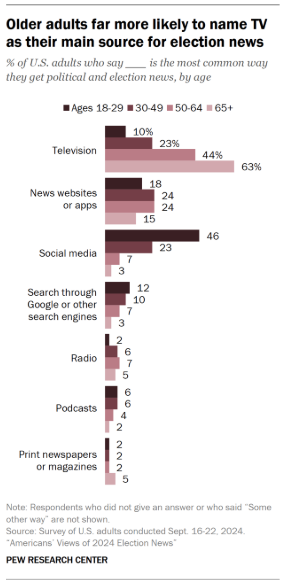
In today’s digitized world, youth are no longer passive recipients of political information; instead, they are active participants in what is dubbed “participatory politics”—a dynamic that gives young people independence from traditional gatekeepers like political interest groups or textbook authors (Kahne & Middaugh, 2012). Through platforms like TikTok, Instagram, and YouTube, adolescents now curate their own political realities, often shaped by algorithmic echo chambers that reward sensationalism, tribalism, and oversimplified moral narratives. Algorithms are designed to maximize engagement, often by feeding users content that aligns with their preexisting views—reinforcing political biases and minimizing exposure to opposing perspectives (Pariser, 2011). Nearly half of Americans under 30 now rely primarily on social media for political news, highlighting the extent to which digital platforms have become formative agents of political socialization (Pew Research Center, 2020; see Figure 1). While some studies show that youth engaging in participatory politics are “twice as likely to report voting” compared to their peers, this civic engagement often lacks ideological complexity. In fact, frequent interaction with ideologically homogeneous online communities can reinforce preexisting beliefs rather than challenge them—particularly when those digital spaces reward performative activism over sustained critical thinking (Kahne & Middaugh, 2012).
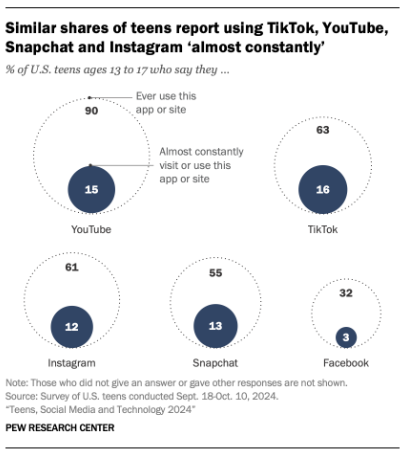
Critics have described much of this performative online activism as “slacktivism”—symbolic digital engagement that rarely translates into meaningful change (Pemuda Rising, 2014). Although the internet can serve as a platform for alternative political narratives, “the chances of media activism have been fewer and far in between” (Pemuda Rising, 2014). This dichotomy—between digital participation and civic substance—raises critical questions about whether youth political identity is being shaped through genuine ideological exploration or through algorithmically curated political messaging that rewards surface-level alignment over substantive engagement. Even researchers who view digital platforms as tools to facilitate democracy for marginalized voices acknowledge the risk that exposure to viral content without critical evaluation of its accuracy, source, or intent may “amplify ideological certainty without fostering democratic discourse” (Sefton-Green, 2006). While some nonpolitical, interest-based online communities do expose young people to a broader range of viewpoints, the dominant trend remains toward self-reinforcing digital silos (Kahne & Middaugh, 2012). A 2024 Pew Research Center report also found that 90% of U.S. teenagers use YouTube, 63% use TikTok, and 61% use Instagram, with nearly 50% of teenagers online “almost constantly” (see Figure 2). These digital ecosystems foster premature solidification of political identity by immersing youth in algorithmically filtered, one-sided partisan content—often escalating in extremity—before they’ve developed the cognitive and civic maturity to evaluate it critically. In effect, digital platforms do not just reflect political beliefs—they shape and harden them early. In doing so, digital media becomes not only a tool for civic expression but also a vehicle for ideological rigidity.
Educational Disparities and Politicization of Civic Curricula
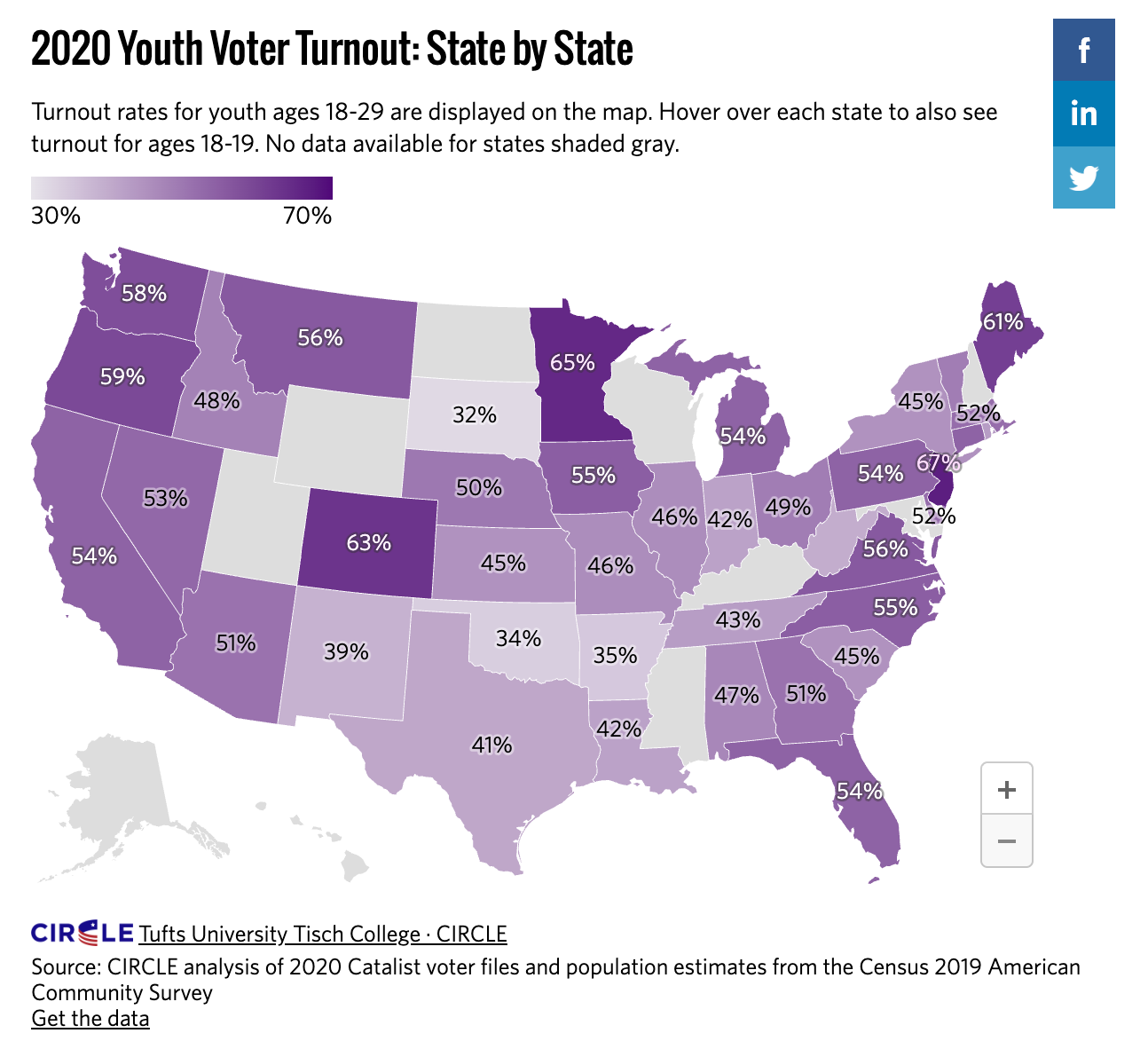
While schools are often idealized as neutral spaces for civic development, the reality is far more fragmented and politicized. Despite widespread recognition that civic education strengthens democratic participation, the American school system continues to offer inconsistent and unequal access to civic learning. Unlike countries with centralized education systems, the United States delegates curriculum decisions to individual states, leading to dramatic variation in the quality, frequency, and content of civic instruction. As Kathleen Hall Jamieson notes, “neither the federal government nor the states have made high-quality civics education a priority,” and “the systemic study of civics in high schools is not universal, and fewer high school civics courses are offered now than in the past” (Jamieson, 2013). In fact, only eight states currently require a full year of civic instruction, and just nineteen require a civics exam to graduate (Thompson, 2023). States such as California have embedded civic engagement projects and pre-registration policies into curricula, whereas Texas mandates fewer civic hours and has faced criticism for politicizing textbooks. These variations result in vastly different levels of civic readiness across state lines. For instance, youth voter turnout in California reached 57% in 2020, compared to just 41% in Texas—a nearly 16-point gap (CIRCLE, 2020; see Figure 3). This disparity reflects bigger structural differences: California integrates civic learning across curricula, encourages service-learning and ethnic studies, and allows civic pre-registration programs—creating more experiential engagement. By contrast, Texas limits civic instruction to a half-year government course, imposes content restrictions on topics like race and history, and lacks service‑learning mandates or civic tests. Moreover, policy audits rate California’s approach as broad and integrated, while Texas receives minimal support ratings for civic learning (Center for American Progress, 2018). This decentralized approach leads to a fragmented landscape in which students’ exposure to civic content depends largely on where they live—intensifying geographic and socioeconomic inequalities in political socialization.
The erosion of civic learning in American schools has been driven not only by decentralized education policy but also by shifting federal priorities. Despite widespread agreement on the importance of preparing students for civic life, civics is frequently treated as an “add-on” rather than a core academic subject (Rebell, 2018). Many states have failed to institutionalize the idea that civic preparation is a primary purpose of public education, resulting in inconsistencies in how—and whether—students are taught to engage with democratic processes (Rebell, 2018). This neglect has been exacerbated by legislation like the No Child Left Behind Act and the Every Student Succeeds Act, both of which emphasized standardized testing in math and literacy while marginalizing social studies and civics (Gould, 2011). As Rebell explains, “educational priorities… focus on basic literacy and mathematics, often at the expense of civics, history, and social studies.” The outcome is a measurable decline in civic knowledge and a weakening of essential democratic competencies such as historical awareness, constitutional reasoning, and media literacy. Without consistent, meaningful civic instruction, youth are left without the tools to critically evaluate political systems, engage in informed debate, or understand their roles as democratic participants. In a society increasingly shaped by disinformation and polarization, this education gap is not just a civic failure but a democratic liability.
The democratic consequences of these disparities are significant. As Jamieson emphasizes, “schooling in civics is associated with increased civic knowledge and participation” (2013). When civic education is well-structured and equitably delivered, it has the potential to create informed, engaged citizens. International comparisons reinforce this point. In a study of developing democracies, Steven Finkel found that “civic education has significant and substantively meaningful effects on local-level political participation” in programs across South Africa and the Dominican Republic (Finkel, 2002). While the context differs, the takeaway is transferable: civic education works—especially when it is frequent, interactive, and sustained. Finkel further notes that “the effects of civic education are largely conditional… dependent on the frequency and nature of the treatment” (2002), suggesting that a single semester of textbook-driven instruction is insufficient to shape lifelong civic habits. Instead, civic development requires repeated engagement—deliberate, experiential, and embedded throughout the educational journey.
Beyond knowledge, strong civic education encourages virtues—traits such as openness, empathy, and a willingness to engage across ideological lines. As Christopher Callaway argues, “democratic citizens in particular fulfill their civic role well when they are engaged, well-informed, and open to ideas and perspectives different from their own” (Callaway, 2018). The quality of civic education students receive in school plays a measurable role in shaping their likelihood to participate in democracy. According to a 2024 national study done by CIRCLE, 81% of young people who strongly agreed that their high school experience allowed their voices and opinions to matter reported being “extremely likely” to vote in the 2024 election. In contrast, only 44% of youth who disagreed with that statement said the same thing—revealing a nearly 40-point gap in political engagement tied directly to perceived civic empowerment during adolescence (CIRCLE, 2024). This disparity illustrates how classroom climate and experiential civics instruction–such as open dialogue, deliberation, and student voice–can influence long-term patterns of participation. These values are foundational to a pluralistic society. Yet without adequate support from institutions, especially in under-resourced schools, these virtues are neither encouraged nor normalized. This gap in civic infrastructure leaves young people ill-equipped to grapple with complex political realities, deepening divisions and disillusionment across generations.
Interpersonal Networks and the Reinforcement of Ideological Conformity
While institutional and algorithmic forces shape the broad contours of youth political identity, much of that identity is stabilized—and often hardened—through peer socialization. Both online and offline peer groups serve as echo chambers where shared beliefs are validated, reinforced, and occasionally weaponized. Peer influence tends to be “generally weak” when it comes to political attitudes, but it intensifies under specific conditions: when attitudes are highly visible, when peer groups are politically engaged, and when group consensus is strong (Campbell, 1980). These situational dynamics create fertile ground for ideological conformity, especially among adolescents who seek social cohesion and approval. Earlier findings highlighting that parents typically wield greater influence over political views acknowledge that peers can become dominant influencers when issues are personally salient or socially charged, such as voting rights or campus activism (Tedin, 1980).
The role of peer groups in political socialization extends beyond mere reinforcement; they can actively shape attitudes through processes of norm-setting and behavioral modeling. Peer groups provide a social context in which group norms for various attitudes and behaviors are established and perpetuated (Poteat, 2007). While individuals often gravitate toward like-minded peers, this initial similarity only intensifies over time through socialization. “Peer group members influenced and also became more similar to each other,” Poteat observes, pointing to a feedback loop that both reflects and constructs ideological identity (Poteat, 2007). In environments where dissent is implicitly discouraged or performatively punished, the cost of ideological deviation becomes steep, limiting the development of independent thought in politically formative years.
This dynamic is amplified yet again in digital contexts, where platforms cultivate group-based interactions with little ideological diversity. Though these peer networks differ from traditional friendships, they serve similar functions of validation and enforcement. Campbell’s framework, which draws on Festinger’s theory of social comparison, is especially relevant here: the influence of peer groups derives from their “group attractiveness” and “means control”—two factors that are only heightened in public-facing online spaces (Campbell, 1980). In this way, the interpersonal becomes inseparable from the political. Youth do not simply adopt ideas because they are rational or compelling; they adopt them because their communities reward adherence and penalize deviation. This kind of ideologically saturated peer environment stifles pluralism and forms a brittle, defensive form of political identity—one far more reactive than reflective.
Long-Term Democratic Consequences of Early Polarization
The formative years of civic identity are not only crucial for understanding adolescent political behavior—they are predictive of a lifetime of engagement or lack thereof. Scholars have long emphasized that civic habits formed during youth, particularly through voluntary associations and community-based activities, lay the groundwork for democratic participation in adulthood. Social incorporation into the body politic begins in the formative years through accumulated opportunities to be involved in groups that build civic identities and skills (Flanagan and Levine, 2010). Yet as socialization processes become increasingly fragmented and ideologically saturated, these foundational experiences are being eroded, undermining the very pipeline through which future civic actors are formed.
Participation in youth voluntary associations—such as student government, service clubs, and debate teams—has been shown to significantly influence long-term political participation. It can be asserted that “involvement in youth voluntary associations concerning community service, representation, speaking in public forums, and generating a communal identity most encourage political participation” (McFarland and Thomas, 2006). These experiences not only provide young people with practical skills but also with a sense of civic efficacy and communal belonging. However, as ideological rigidity, digital slacktivism, and institutional neglect crowd out these traditional formative experiences, the democratic impact is far from trivial. As the authors underscore, “the influence of youth voluntary associations on future political activity is nontrivial and has implications for both democratic education and election outcomes.” It is further emphasized that “political identities formed in the early-adult years are highly predictive of the positions individuals will hold in middle and even late adulthood” (Flanagan and Levine, 2010). This makes early civic experiences not only formative but enduringly influential.
This erosion is especially troubling when viewed through the lens of civic orientation, a concept encompassing community service, conceptualizations of citizenship, and early civic participation. It has been argued that “a successful model of civic/political participation must account for the process by which young people acquire the values and habits that lead to civic engagement” (Crystal and DeBell, 2002). These habits are not innate; they are cultivated through meaningful opportunities to engage in community life. When these opportunities diminish, so too does the likelihood that young people will grow into politically engaged adults. “Youths who are involved in civic activities… are more likely to exhibit civic engagement in early and middle adulthood than are youths who are uninvolved” (Crystal and DeBell, 2002).
The consequences extend beyond disengagement—they represent a structural unraveling of democratic culture. As one interviewee reflects, “I think it’s very important that [youth] have the opportunity to learn, to have the experience of giving back to the community because if they have a positive experience as seniors in high school, they’ll be more likely to be lifelong stewards, giving back to the community in some way” (Schusler et al., 2009). But in the absence of such positive formative experiences, young people enter adulthood with fewer civic habits, less confidence in their political efficacy, and reduced willingness to contribute to the democratic process.
In sum, the long-term democratic consequences of today’s fragmented, polarized, and inconsistent civic socialization are clear. As the institutions and networks that once developed civic identity weaken, the result is not just ideological extremism—it is civic atrophy. Without intervention, this generation may become the first in modern American history to approach democratic citizenship with more suspicion than responsibility, and more detachment than duty.
Existing Mitigation Efforts
Recognizing the civic risks of early ideological entrenchment, a range of organizations and initiatives have emerged to re-engage youth in democratic life. Nonpartisan education programs such as iCivics, Generation Citizen, and CIRCLE’s Growing Voters Report advocate for early, developmentally tailored civic learning that begins well before voting age. These initiatives emphasize hands-on engagement, school-based infrastructure, and equitable access—arguing that early exposure to civic opportunity encourages lasting participation.
Meanwhile, efforts like the News Literacy Project and Common Sense Education seek to improve digital discernment, combating the algorithmic echo chambers that contribute to polarization. These measures equip students with skills to critically evaluate online information, recognize misinformation, and engage responsibly with digital media—an increasingly vital component of modern civic education.
iCivics has grown to reach approximately 9 million students and 145,000 educators across all 50 states, according to its most recent published impact data (iCivics, 2024). CIRCLE conducted a randomized experimental evaluation of iCivics’ “Drafting Board” module in Florida, involving over 3,700 students. Students using the module outperformed control students on blind-graded persuasive essays by a statistically significant margin (p<.001), even after accounting for demographic and school-level variables (Kawashima-Ginsberg, 2012). This demonstrated iCivics' measurable impact on students’ argumentation skills with just a few classroom sessions.
Generation Citizen, serving more than 25,000 students across multiple states, equips students with action-based civic skills—its programs have produced large effect sizes in civic engagement: treatment group students ranked in the 72nd percentile of civic engagement vs. 35th for controls, indicating dramatically higher civic development (quasi-experimental design, Cohen et al., 2013). Additional analysis showed students participating in Generation Citizen programs exhibited a 26 percent greater civic self-efficacy than their peers who did not, and nearly 70 percent of teachers reported improved student belief in their ability to effect change (Ward, 2022).
Media literacy initiatives have also expanded to address the digital dimension of youth civic formation. The News Literacy Project’s Checkology platform shows that students who completed its modules improved their ability to identify credible news from misinformation—students correctly recognized more credible sources (a 27-point gain) and recognized when social media posts lacked evidence (an 18-point gain) (Checkology, 2024). In a national 2024 SSRS survey of 1,110 teens, 94 percent agreed that media literacy education should be required in schools, yet fewer than 39 percent reported actually receiving it (News Literacy Project, 2024). The gap underscores how widespread support for these programs contrasts sharply with limited access in practice. Similarly, Common Sense Education’s digital citizenship curriculum has reached over 72,000 schools and 500,000 educators—and independent evaluation found measurable gains in critical thinking and decision-making related to online disinformation after just six weeks of instruction (Herold, 2018).
Despite demonstrated success, these efforts remain largely decentralized and inconsistently implemented across schools and states—especially in lower-income districts. Without federal or statewide integration, funding stability, or curricular mandates, even effective programs often remain as isolated pilot initiatives rather than scalable civic infrastructure. As such, they function more as stopgap measures than as a systemic solution to the deeply embedded forces shaping youth political identity.
Toward a More Engaged Generation
While existing programs like iCivics and CIRCLE offer promising frameworks for civic engagement, their reach remains uneven—particularly in under-resourced districts with limited instructional time or staff capacity. This inequity suggests structural reform may be necessary to ensure equitable access nationwide. One potential solution would be to federalize civic education by establishing a nonpartisan, nationally standardized curriculum as a graduation requirement across public schools. Overseen by a bipartisan commission isolated from political swings, such an initiative could guard against ideological manipulation while reinforcing foundational civic competencies.
The demand for such reform is supported by evidence: a 2021 report from the Educating for American Democracy (EAD) initiative found that the federal government spends only $0.05 per student per year on civics education, compared to approximately $50 per student on STEM subjects (Educating for American Democracy, 2023). Further, EAD found that fewer than half of U.S. students receive a high-quality civics education, with schools serving low-income students and majority Black and Brown students disproportionately underserved (Center for Economic Development, 2023). These stark disparities reflect the reality that, without structural reform, civic opportunity remains deeply unequal across lines of geography and resources.
Though quixotic, a unified civic infrastructure may be one of the most powerful tools for combating early ideological entrenchment and promoting informed, participatory citizens. Without it, existing interventions—no matter how effective—remain fragmented and temporary, leaving millions of students civically underprepared based on their ZIP code alone. While further exploration of implementation strategies falls outside the scope of this paper, this proposal offers a foundation upon which policymakers could build a more equitable civic future.
Conclusion
As ideological rigidity creeps further into adolescence, the challenge of polarization transforms from a crisis of institutions to a crisis of identity. Youth are no longer entering adulthood as blank political slates—they are arriving already entrenched, shaped by unequal education, algorithmic echo chambers, and peer networks that reward conformity over reflection. While civic identity has always been socialized, today’s socialization is happening faster, harder, and with fewer safeguards for democratic nuance. If left unaddressed, this premature polarization risks producing generations of citizens less capable of compromise, more vulnerable to extremism, and increasingly distrustful of the institutions meant to serve them. To preserve democratic resilience, scholars and policymakers alike must treat youth political development not as a passive byproduct of adulthood—but as the front line of civic repair. To do that, we must begin where polarization begins: before the ballot.
References
Braungart, M. M., & Braungart, R. G. (1990). Studying Youth Politics: A Reply to Flacks. Political Psychology, 11(2), 293–307. https://doi.org/10.2307/3791691
Callaway, C. A. (2018). Civic Duties, Civic Virtues, and the Barriers to Effective Citizenship. Human Rights, 43(2), 22–25. http://www.jstor.org/stable/26423448
Campbell, B. A. (1980). A Theoretical Approach to Peer Influence in Adolescent Socialization. American Journal of Political Science, 24(2), 324–344. https://doi.org/10.2307/2110868
Checkology. (2024, December 3). Impact: Checkology: The News Literacy Project. https://get.checkology.org/impact
Christie, D., & Viner, R. (2005). Abc Of Adolescence: Adolescent Development. BMJ: British Medical Journal, 330(7486), 301–304. http://www.jstor.org/stable/25458847
Circle at Tufts. (2021, March 24). State-by-state 2020 youth voter turnout: West and Southwest. https://circle.tufts.edu/latest-research/state-state-2020-youth-voter-turnout-west-and-southwest
Circle at Tufts. (2024, March 12). Youth who develop their voice in high school are more likely to vote.https://circle.tufts.edu/latest-research/youth-who-develop-their-voice-high-school-are-more-likely-vote
Cohen, A.K., Pope, A., Stolte, L.C., Ridley-Kerr, A., & Wong, K. (under review). Civic Learning through Action: The Case of Generation Citizen. Action Civics and Civic Outcomes for Urban Youth: A Quasi-experimental Evaluation of Generation Citizen. https://circle.tufts.edu/sites/default/files/2019-12/civic_learning_action_generation_citizen_2013.pdf
Committee for Economic Development - The Public Policy Center of the Conference Board. (2023, September 27). Policy Backgrounder: The State of Civics Education in the US. https://www.ced.org/pdf/CED_Policy_Backgrounder_Civics_Education_FINAL.pdf
Craiutu, S., & Ngalande, J. (n.d.). State Civics Requirements in 2024. Hoover Institution. https://www.hoover.org/research/state-civics-requirements-2024
Crystal, D. S., & DeBell, M. (2002). Sources of Civic Orientation among American Youth: Trust, Religious Valuation, and Attributions of Responsibility. Political Psychology, 23(1), 113–132. http://www.jstor.org/stable/3792246
Ehman, L. H. (1980). The American School in the Political Socialization Process. Review of Educational Research, 50(1), 99–119. https://doi.org/10.2307/1170032
Educating for American Democracy. (2023, December 15). Why is Educating for American Democracy Important?. https://www.educatingforamericandemocracy.org/our-vision
Finkel, S. E. (2002). Civic Education and the Mobilization of Political Participation in Developing Democracies. The Journal of Politics, 64(4), 994–1020. http://www.jstor.org/stable/1520073
Flanagan, C., & Levine, P. (2010). Civic Engagement and the Transition to Adulthood. The Future of Children, 20(1), 159–179. http://www.jstor.org/stable/27795064
Gould, J. (2011). Guardian of Democracy: The Civic Mission of Schools. University of Pennsylvania, Annenberg Public Policy Center ; Campaign for the Civic Mission of Schools.
Grotevant, H. D., & Cooper, C. R. (1985). Patterns of Interaction in Family Relationships and the Development of Identity Exploration in Adolescence. Child Development, 56(2), 415–428. https://doi.org/10.2307/1129730
Hammack, P. L. (2010). Identity as Burden or Benefit? Youth, Historical Narrative, and the Legacy of Political Conflict. Human Development, 53(4), 173–201. https://www.jstor.org/stable/26764960
Herold, B. (2018, June 7). Common sense media overhauls popular digital citizenship curriculum. Education Week. https://www.edweek.org/teaching-learning/common-sense-media-overhauls-popular-digital-citizenship-curriculum/2018/06
iCivics. (2025, July 21). See Our Impact - 2024 Annual Report. https://vision.icivics.org/impact
Jamieson, K. H. (2013). The Challenges Facing Civic Education in the 21st Century. Daedalus, 142(2), 65–83. http://www.jstor.org/stable/43297234
Jeffrey, A., & Sargrad, S. (n.d.). Strengthening democracy with a modern civics education - Center for American Progress. https://www.americanprogress.org/article/strengthening-democracy-modern-civics-education/
Kahne, J., & Middaugh, E. (2012). Digital media shapes youth participation in politics. The Phi Delta Kappan, 94(3), 52–56. http://www.jstor.org/stable/41763677
Kawashima-Ginsberg, K. (2012, December). Summary of Findings from the Evaluation of iCivics’ Drafting Board Intervention. https://circle.tufts.edu/sites/default/files/2020-01/WP76_summary_findngs_evaluation_icivics_2012.pdf
Maxon, R. C., & Malone, B. (1977). The Influence of Peer Groups on Secondary School Students. The Clearing House, 50(5), 191–193. http://www.jstor.org/stable/30184870
McFarland, D. A., & Thomas, R. J. (2006). Bowling Young: How Youth Voluntary Associations Influence Adult Political Participation. American Sociological Review, 71(3), 401–425. http://www.jstor.org/stable/30038997
McIntosh, H., Hart, D., & Youniss, J. (2007). The Influence of Family Political Discussion on Youth Civic Development: Which Parent Qualities Matter? PS: Political Science and Politics, 40(3), 495–499. http://www.jstor.org/stable/20452003
News Literacy Project. (2024, October). A Survey of Teen Information Attitudes, Habits, and Skills (2024). News Literacy in America. https://newslit.org/wp-content/uploads/2024/10/NLP-Teen-Survey-Report-2024.pdf
Orenstein, G. A., & Lewis, L. (2022, November 7). Erikson’s Stages of Psychosocial Development. StatPearls - NCBI Bookshelf. https://www.ncbi.nlm.nih.gov/books/NBK556096/
Pacheco, J. S. (2008). Political Socialization in Context: The Effect of Political Competition on Youth Voter Turnout. Political Behavior, 30(4), 415–436. http://www.jstor.org/stable/40213326
Pariser, E. (2011). The filter bubble: What the Internet is hiding from you. Penguin Press.
Pew Research Center. (2024, October 10). 2. where Americans turn for election news. https://www.pewresearch.org/journalism/2024/10/10/where-americans-turn-for-election-news
Poteat, V.P. (2007). Peer Group Socialization of Homophobic Attitudes and Behavior during Adolescence. Child Development, 78(6), 1830–1842. http://www.jstor.org/stable/4620741
Rebell, M. A. (2018). Preparation for capable citizenship: The schools’ primary responsibility. The Phi Delta Kappan, 100(3), 18–23. https://www.jstor.org/stable/26552459
Schusler, T. M., Decker, D. J., Peters, S. J., & Krasny, M. E. (2009, February). Developing Citizens and Communities Through Youth Environmental Action. https://www.researchgate.net/publication/228796162_Developing_citizens_and_communities_through_youth_environmental_action
Sebastian, L. C., Chen, J., & Syailendra, E. A. (2014). Youth and the New Social Media. In Pemuda Rising: Why Indonesia Should Pay Attention to its Youth (pp. 46–54). S. Rajaratnam School of International Studies. http://www.jstor.org/stable/resrep05897.8
Sefton-Green, J. (2006). Youth, Technology, and Media Cultures. Review of Research in Education, 30, 279–306. http://www.jstor.org/stable/4129775
Tedin, K. L. (1980). Assessing Peer and Parent Influence on Adolescent Political Attitudes. American Journal of Political Science, 24(1), 136–154. https://doi.org/10.2307/2110929
Thompson, C. (2023, May 3). State support for Civic Engagement. Learning Policy Institute. https://learningpolicyinstitute.org/product/state-support-civic-engagement-report
Ward, S. (2022, Spring 2). Lack of Quality Civic Education in Public Schools in the United States. Ballard Brief. https://ballardbrief.byu.edu/issue-briefs/lack-of-quality-civic-education-in-public-schools-in-the-united-states