


.jpg)
.jpg)
.jpg)
.jpg)


.svg)


.svg)
This piece examines China’s growing influence across the Global South through infrastructure, trade, and development financing, with a focus on how the United States can respond more effectively. It is aimed to keep the analysis accessible while still grounding the argument in current data and policy research.
Article content
For most of modern history, being a superpower meant having a powerful military. China has added another tool: infrastructure. AidData tracks 33,580 projects valued at around $2.2 trillion that have been financed through Chinese government institutions in 217 countries from 2000 to 2023. China’s influence has spread through the ports, railroads, roads, energy resources, and telecommunications infrastructure in Africa, Asia, Latin America, and the Middle East through what it calls “The Belt and Road Initiative.” The critical issue is whether China is increasing its influence faster than the U.S. can respond.
What is the Belt and Road Initiative?
The Belt and Road Initiative, or BRI, is a Chinese infrastructure program launched by President Xi Jinping in 2013. It finances infrastructure connecting China with markets across Asia, Europe, Africa, and the Middle East. By 2025, Chinese investment and construction under the BRI had reached roughly $1.4 trillion across about 150 countries. For developing nations, the appeal is clear. The World Bank tells us that BRI transportation infrastructure projects have been estimated to reduce journey times by up to 12% and boost commerce among the involved economies by up to 9.7%. Improved infrastructure facilitates faster movement of products as well as accessing wider markets for goods.
Why is Chinese lending controversial?
Most BRI projects require countries to borrow money. AidData's 2025 database identified 620 Chinese collateralized public loans worth about $418 billion across 57 countries. An AidData study also found that many Chinese loan agreements contain confidentiality requirements and protections that give Chinese lenders stronger repayment guarantees. China does not create each and every debt crisis. Factors such as corruption, recessions, wrong decisions by the government, and other lenders also play an important role. Nevertheless, as these nations experience problems paying back big debts owed to China, they become increasingly dependent on Beijing for new and even postponed debts.
Why do countries keep accepting Chinese investment?
Many developing countries still have enormous infrastructure needs. The World Bank estimates that 666 million people lack electricity, one billion live more than two kilometers from an all-season road, and 2.6 billion remain without internet access. Chinese financing can provide infrastructure that governments may otherwise wait years to afford. The World Bank estimates that through BRI transport infrastructure projects, foreign investments could be boosted by up to 7.6 percent, and 32 million people could be lifted out of moderate poverty. For many nations, the decision to get Chinese funding is one of weighing the danger of being underdeveloped against the danger of debt.
What does China gain?
China gains markets, resources, trade routes, and long term influence. AidData found that Chinese institutions provided nearly $24 billion for projects involving 168 ports across 90 countries.
China also dominates the processing of important minerals. The International Energy Agency found that China controlled 91 percent of global refining for magnet rare earths and 94 percent of permanent magnet production in 2024. Trade strengthens this influence. According to Chinese customs data, trade between China and Africa had set a record in the year 2024 at an amount of $295.6 billion. China had also been Africa’s biggest trading partner for 16 years continuously. The logic is straightforward – countries that borrow money from China, trade with China, have Chinese infrastructure, and depend on China’s processing get economically closer to Beijing.
Is America losing influence?
Yes, particularly because developing countries now have alternatives. Between 2013 and 2021, China provided about $679 billion for transportation, energy, telecommunications, water, and mining projects. The United States provided about $76 billion in those same sectors. China spent almost nine times as much. America has also struggled to measure whether its own investments work. A June 2026 GAO report had found that State and USAID had funded about 470 projects worth almost $1.2 billion from 2020 to 2023 to resist Chinese influence but did not have any means to measure the success of these projects. American funding is also slow. The Center for Strategic and International Studies found that projects through the United States International Development Finance Corporation can take between nine months and two years for approval.
What should the United States do?
America needs to offer developing countries stronger alternatives. One example is the Lobito Corridor. The United States International Development Finance Corporation provided funding for the upgrading of rail networks linking mineral-rich parts of Africa to the Atlantic, which totaled up to $553 million. The US needs to continue along these lines by expanding projects, increasing trade, and speeding up financing while making effective use of American businesses. China succeeded in establishing itself in the region as it provided a useful asset to governments. The US will need to follow suit.
Acknowledgement
The Institute for Youth in Policy wishes to acknowledge Sarah Hutchison for editing this policy op-ed.
Image Credit
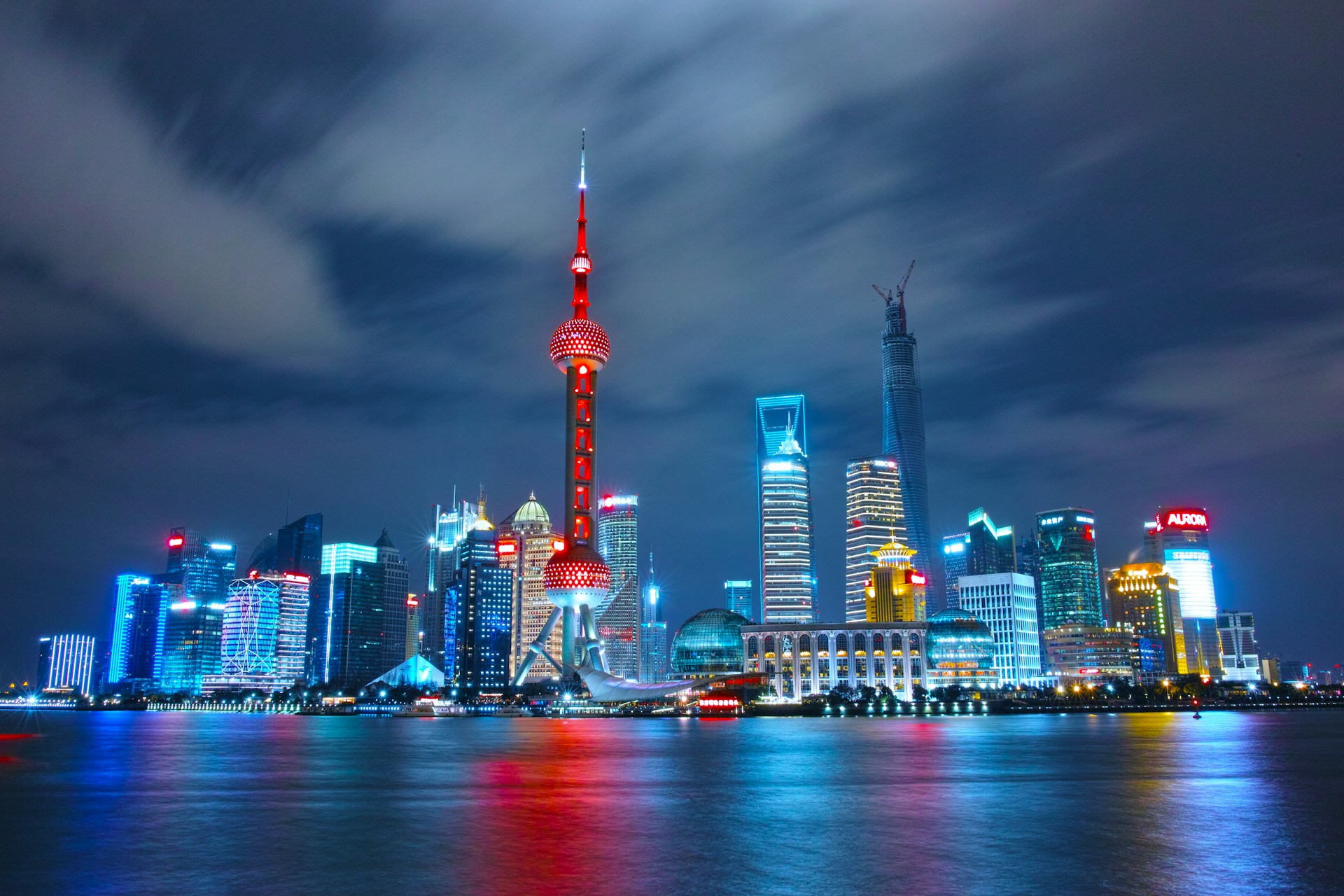
Li, Yang. Architectural Photograph of Lighted City Sky. Photograph. September 18, 2016. Unsplash. https://unsplash.com/photos/architectural-photograph-of-lighted-city-sky-5h_dMuX_7RE.


.jpg)
