


.jpg)
.jpg)
.jpg)
.jpg)


.svg)


.svg)
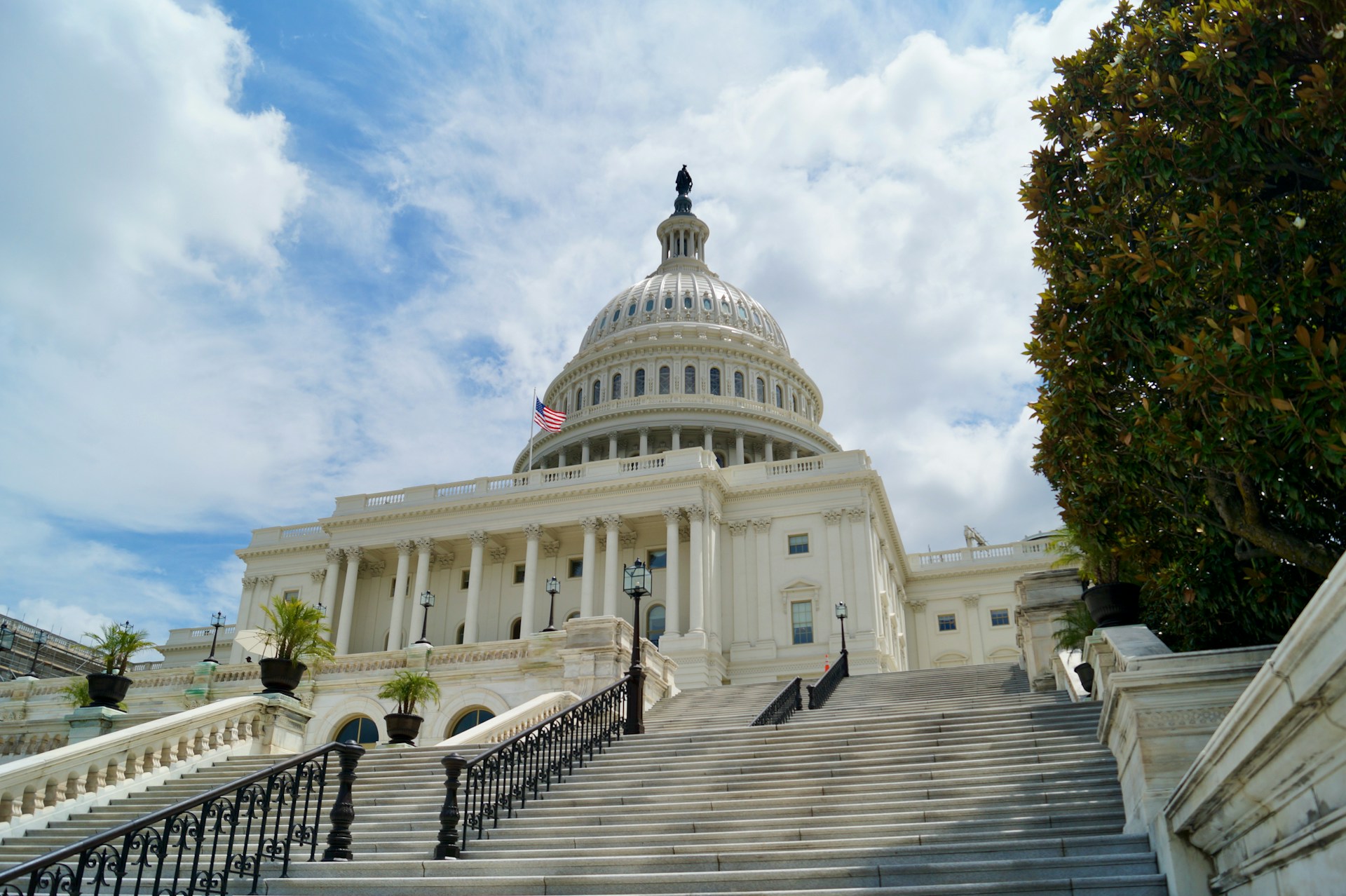
A long time ago, a group of ancient and wise men known as the Wu Tang Clan created the modern philosophy C.R.E.A.M: Cash Rules Everything Around Me. In the 1990s, it was a song. In 2026 it’s become the principle that defines our congress.
Article content
When the federal government shut down in late 2025, members of Congress continued receiving their salaries. Meanwhile, over 670,000 federal employees were furloughed and roughly 730,000 others continued reporting to work without receiving their normal paychecks. The shutdown lasted 43 days, making it the longest full shutdown in American history. Which raises the basic question: When Congress fails to perform one of its most important responsibilities, why are workers and families expected to experience the consequences first?
How does a government shutdown happen?
The federal government operates on a fiscal year that begins every October 1st. Before that date, Congress is expected to approve twelve appropriations bills that provide funding for different agencies and programs. Those bills must pass both the House and Senate before being signed by the president. But our very “efficient” congress rarely completes that process on schedule. When there isn’t enough time, the politicians will authorize what is known as a continuing resolution, which is essentially keeping government money at its current status. What happens in case there isn’t enough time to do any of the above? That is what is called a “government shutdown.” Under the Antideficiency Act, federal agencies generally cannot spend money that Congress has not appropriated. They must stop activities that lack funding unless a legal exception applies. Since 2019, there has been retroactive payment for furloughed and excepted federal workers as part of a federal law after a government shutdown. Despite the retroactive payments, their existence does not mitigate any damages done in the meantime due to the lack of wages. The rent, loan payments, food bills, travel expenses, and child care fees cannot be put on hold until the negotiations are completed.
How much do shutdowns actually cost?
The 35-day 2018-2019 shutdown, the second longest in history, delayed about $18 billion in federal spending and shrank the economy by roughly $11 billion, with most of that money coming back once the government reopened. The 2025 shutdown did worse with the CBO estimating between $7 billion and $14 billion in permanent losses, plus a hit of one to two percentage points to annualized fourth-quarter growth.
Why hasn't accountability worked, and would harsher punishment fix it?
Under Kennedy's resolution, senators' pay is held back and released once the shutdown ends, meaning it's delayed, not lost, so a member's finances end up the same either way once it's over. Furloughed and excepted workers don't have that same guarantee for rent or groceries during the shutdown itself, only for the paycheck eventually. Members should lose that pay for good, one day of pay for each day of the shutdown, so the cost is real instead of deferred.
What would actually stop the damage?
There is one common variable among all four of the shut-downs: an expiration date for funding. When funding expires, a ripple effect follows – from furloughs to unpaid excepted workers, contractors without back pay, pending small business loans, pending inspection, and other pending costs incurred after shut-down. Remove the expiration date, and per the Antideficiency Act, none of those downstream effects have a trigger, since agencies only have to stop spending when authorization actually lapses.
A self-executing continuing resolution does that directly: funding continues automatically at existing levels if new appropriations aren't passed, with a built-in inflation adjustment so agencies aren't running on flat dollars indefinitely. Under this model, the 2025 shutdown's $7-14 billion in permanent GDP loss doesn't occur, because there's no mechanism for a funding lapse to happen at all. The dispute over healthcare subsidies that caused the 2025 shutdown would still need to be resolved, but through a normal legislative vote instead of 43 days of unpaid federal workers.
Versions of this already exist in Congress: Britt, Lankford, and Hassan's bill, and Grassley's rolling 14-day version. However, the disadvantage of eliminating the deadline is that it eliminates the current pressure for appropriations bills to be put forward for voting. With the CR continuing indefinitely, the legislature would be free to pass no more appropriations legislation for many years to come, with agencies being forced to operate with old and out-of-date appropriation amounts that make the implementation of new programs impossible, as well as fail to match the true needs of agencies. Self-executing CR can only function properly with the addition of something that will add back the pressure, such as mandatory session and inability to take recess or work on other bills while the CR is active.
In the present system, the costs of the funding dispute fall to the furloughed workers, to the unpaid excepted employees, to the contractors not guaranteed payment, and to the entire economy via a permanent drop in GDP; however, those costs do not affect the people that are actually resolving the funding dispute.
The Wu-Tang Clan said cash rules everything around us. It shouldn't be what decides whose rent goes unpaid when Congress can't do its job.
Acknowledgement
The Institute for Youth in Policy wishes to acknowledge Sarah Hutchison for editing this policy op-ed.
Image Credit
Schroth, Samuel. White Concrete Building under Blue Sky During Daytime. Photograph. Unsplash. Published April 17, 2021. https://unsplash.com/photos/white-concrete-building-under-blue-sky-during-daytime-hyPt63Df3Dw.


.jpg)
