


.jpg)
.jpg)
.jpg)
.jpg)


.svg)


.svg)
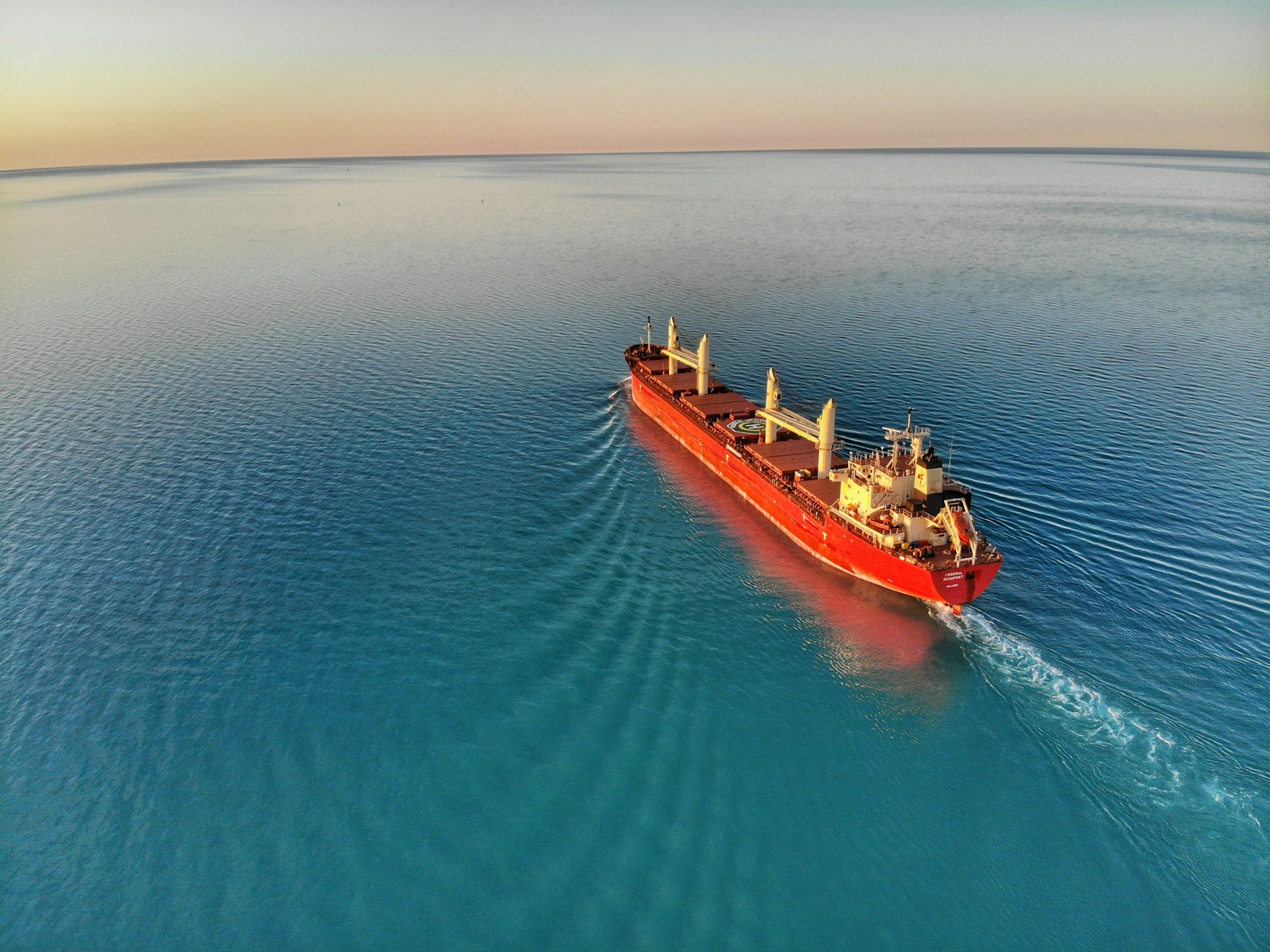
Bangladesh has secured a vast maritime zone and is investing heavily in new ports. Yet trade, fisheries, energy, security, diplomacy, and climate policy are still treated as separate agendas. A smarter maritime strategy would manage the Bay of Bengal as one connected economic, environmental, humanitarian, and national-security space.
Article content
Bangladesh often describes itself as a riverine country, but its future will be increasingly maritime. The legal settlements with Myanmar in 2012 and India in 2014 gave Bangladesh sovereign rights over approximately 118,000 square kilometres of sea. That achievement removed uncertainty over maritime boundaries, but it did not automatically create the institutions, technology, investment discipline, or diplomatic strategy needed to use the area effectively. More than a decade later, Bangladesh has numerous maritime projects but still lacks a sufficiently integrated maritime purpose.
The first test is trade. Chattogram Port handled a record 3.296 million twenty-foot-equivalent units in fiscal year 2024–25, while Chattogram Custom House collected Tk 75,432 crore. This demonstrates both the port’s economic importance and the danger of excessive dependence on a single gateway. The World Bank’s $650 million Bay Terminal project and the Japan-supported Matarbari project can expand capacity and allow larger vessels to serve Bangladesh. But a larger port is not automatically a smarter port. Without faster customs clearance, dependable rail and road connections, transparent terminal concessions, modern navigation systems, cybersecurity, and an efficient national logistics network, new infrastructure may shift congestion rather than remove it.
Bangladesh must also stop treating the “blue economy” as a slogan for extracting more resources. Department of Fisheries data show that marine fisheries produced approximately 629,000 metric tonnes in 2023–24. Yet the World Bank reports that fishing activity remains concentrated in waters around 80 metres deep, covering only about one-third of the country’s exclusive economic zone, while overfishing, juvenile catch, and illegal trawling threaten existing stocks. The answer is not simply to send more boats farther offshore. Bangladesh needs regular stock assessments, compulsory vessel tracking, enforceable licensing, modern landing centres, cold-chain investment, effective marine protected areas, and insurance and safety systems for small-scale fishers. The objective should be higher value from a healthy ecosystem, not a short-lived increase in catch.
Energy policy reveals a similar gap between ambition and capability. Bangladesh offered 24 offshore oil and gas blocks in 2024, but the bidding round ended without a single proposal, despite initial interest from several international companies. Petrobangla subsequently opened a new bidding round in May 2026, covering 26 offshore blocks. The renewed effort may be necessary as domestic gas production declines, but desperation is not a negotiating strategy. Bangladesh needs credible seismic data, stable contract terms, transparent bidding, strong environmental safeguards, clear decommissioning rules, and realistic assessments of commercial risk. Offshore gas should also be considered alongside offshore wind, energy storage, strategic fuel reserves, and the vulnerability of imported LNG supply routes. Maritime energy security is much wider than drilling.
Security, meanwhile, cannot be reduced to buying naval platforms. Bangladesh faces illegal fishing, narcotics trafficking, arms smuggling, maritime accidents, pollution, human trafficking, and the risk of piracy. The continuing conflict in Myanmar adds a dangerous humanitarian dimension. In July 2026, the UN refugee agency was investigating reports that two boats carrying Rohingya refugees had capsized in the Bay of Bengal. The Associated Press reported that more than 5,400 Rohingya had attempted sea journeys during 2026 and approximately 540 were dead or missing. These are not only refugee issues. They are tests of surveillance, rescue coordination, law enforcement, regional diplomacy, and the state’s ability to understand what is happening in its waters.
Bangladesh therefore needs an integrated maritime-domain-awareness system connecting the Navy, Coast Guard, port authorities, fisheries agencies, customs, police, disaster-management bodies, and scientific institutions. Coastal radar, satellite imagery, automatic-identification-system data, fishing-vessel monitoring, weather information, and port intelligence should feed into a common operational picture. Cooperation with neighbouring countries is equally important. The 2025 Bongosagar naval exercise and coordinated patrol with India demonstrated the practical value of interoperability. Bangladesh’s membership in the Colombo Security Conclave provides another platform for cooperation on maritime safety, trafficking, cyber threats, terrorism, and disaster response. Such cooperation should strengthen Bangladesh’s autonomy, not draw it into bloc politics.
That distinction matters because the Bay of Bengal is becoming more strategically competitive. Japan supports Matarbari, the World Bank is financing Bay Terminal infrastructure, and Bangladesh and China have agreed to deepen maritime and blue-economy cooperation. India remains Bangladesh’s closest maritime neighbour, while the United States and other Indo-Pacific partners are increasingly interested in regional connectivity and maritime security. Dhaka should not frame these relationships as a choice between rival powers. It should adopt a transparent, project-based policy that selects partners according to financing quality, technology transfer, environmental standards, commercial viability, and national control over critical infrastructure. Strategic ambiguity without institutional discipline can create dependency. Diversified cooperation guided by clear rules can create leverage.
Regional diplomacy also presents opportunities that Bangladesh has not fully used. The BIMSTEC Agreement on Maritime Transport Cooperation, signed in April 2025, is intended to improve shipping connections among Bay of Bengal states. Bangladesh should push for practical implementation through harmonised port procedures, coastal shipping routes, digital documentation, search-and-rescue protocols, pollution-response arrangements, and regional fisheries cooperation. A successful maritime strategy must make Bangladesh a connector between South and Southeast Asia, not merely a location where larger powers construct projects.
Climate risk must sit at the centre of these choices. The World Bank’s Bangladesh Country Climate and Development Report notes that two-thirds of the country lies less than five metres above sea level. Ports, coastal industrial zones, naval facilities, energy terminals, fishing communities, and the Sundarbans are exposed to cyclones, storm surges, erosion, salinity, and rising seas. Every major maritime investment should therefore undergo climate and disaster-risk testing. Bangladesh should also invest in mangrove restoration, blue-carbon research, oil-spill response, marine pollution control, and resilient coastal livelihoods.
The entry into force of the International Maritime Organization’s Hong Kong Convention in June 2025 is particularly important for Bangladesh’s ship-recycling industry. As one of the states whose ratification helped trigger the convention, Bangladesh now has an opportunity to transform a hazardous but economically significant sector. Compliance should be used to improve worker safety, hazardous-waste management, environmental monitoring, and international competitiveness. It must not become another paperwork exercise that leaves conditions on the ground unchanged.
The institutional solution is straightforward, even if implementation will be difficult. Bangladesh needs a cabinet-level maritime council, a ten-year national maritime strategy, a legally supported marine spatial plan, and an annual public report measuring port efficiency, fish stocks, maritime incidents, ecosystem health, energy exploration, and project delivery. Major maritime decisions should be based on shared data and subjected to economic, environmental, security, and debt-risk assessments. Universities and research institutes should receive long-term support to develop expertise in oceanography, maritime law, hydrography, marine biotechnology, engineering, cybersecurity, and maritime policy.
Bangladesh does not need a maritime strategy merely because the Bay of Bengal is geopolitically important. It needs one because food security, export competitiveness, energy resilience, climate survival, and regional influence now meet at sea. The country has already secured its maritime boundaries and begun building major infrastructure. The next task is harder: replacing fragmented ambition with coordinated statecraft. A smarter strategy would make the Bay of Bengal not a distant frontier, but a disciplined national priority.
Image Credit
Pagan, Chris. Red and White Cargo Ship at Middle of Ocean. Photograph. Unsplash. Published September 12, 2019. https://unsplash.com/photos/red-and-white-cargo-ship-at-middle-of-ocean-sfjS-FglvU4.


.jpg)
