What’s Happening?
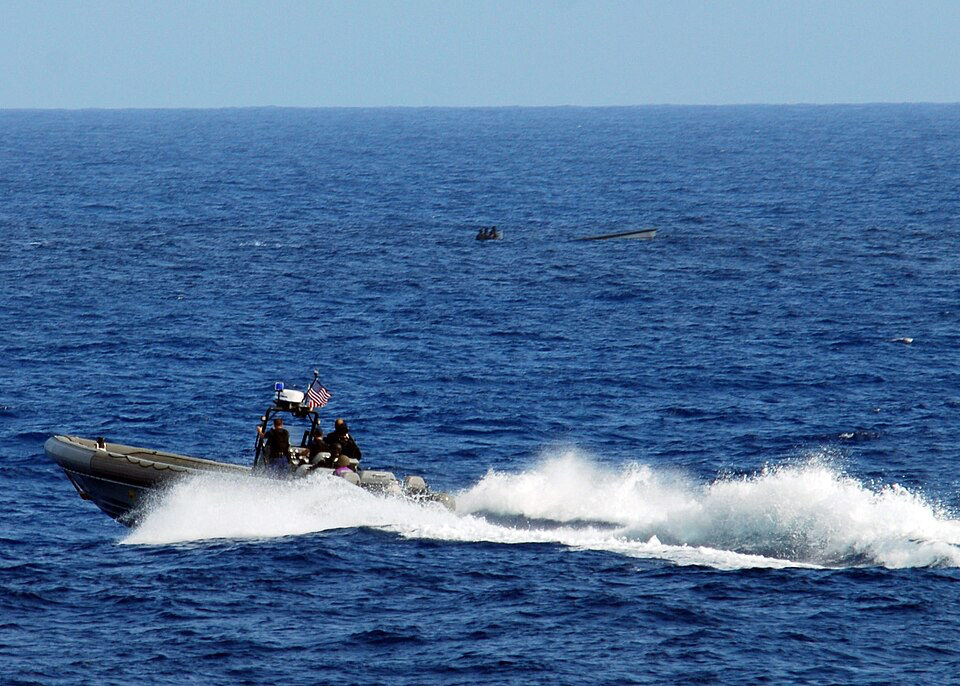
Joint Task Force Western Hemisphere carried out the strike under SOUTHCOM’s direction, targeting what the command called a go-fast vessel on established trafficking routes. The only material made public was a brief video showing the boat on the water moments before an explosion. As it has throughout the campaign, the government has not named the victims.
Before this strike, the Washington Office on Latin America (WOLA), which tracks the campaign, had recorded at least 238 deaths across 68 strikes in the Caribbean and Eastern Pacific. The tempo has since slowed: WOLA analyst Adam Isacon counted six lethal strikes in the preceding four months. President Trump maintains that the United States is in an “armed conflict” with Latin American cartels and casts the strikes as necessary to curb drug flows and overdose deaths.
What’s Being Done?
Executive: The administration has designated numerous Latin American criminal groups as foreign terrorist organizations. In September, Secretary of State Marco Rubio said Washington would seek regional allies’ approval for future strikes, while reserving the option to act unilaterally on a strike-by-strike basis.
Oversight: In May, the Pentagon’s inspector general announced a review of whether the military followed its targeting framework. The review excludes the question of legality.
Litigation: The families of Chad Joseph and Rishi Samaroo, two Trinidadians they say were killed in an October 2025 strike, filed a wrongful-death suit in January that is now before a federal court in Boston. The ACLU and the Center for Constitutional Rights represent them. Relatives of Colombian fisherman Alejandro Carranza have separately petitioned the Inter-American Commission on Human Rights.
What’s the Significance?
The core objection is legal. International law treats drug trafficking as a crime rather than an act of war and generally bars the use of military force for law enforcement, so scholars argue the strikes would remain extrajudicial killings even if every target were a trafficker. Legal experts likewise reject the administration's attempt to recast cartels as terrorist organizations.
The evidentiary gap compounds the problem. In Colombia, Ecuador, and Trinidad and Tobago, relatives have said those killed were fishermen with no ties to the drug trade. Given that the government has offered little to substantiate its claims, neither Congress nor the public can independently assess who is being targeted.
The Policy rationale is also in doubt. The fentanyl behind many U.S. overdose deaths typically enters overland from Mexico, where it is produced with precursor chemicals imported from China and India. Isacson contends the strikes have had no measurable effect on drug trade.
Conclusion
The November 3 midterms will decide the control of a Congress that Republicans currently hold by 218 to 214 in the House and 53 to 47 in the Senate. A Democratic House would be positioned to direct committee investigations into the administration. Meanwhile, the Boston suit keeps the strikes before a federal court, and the inspector general’s targeting review will leave the legal question unresolved. Until the government discloses whom it is killing and on what evidence, each strike deepens questions it has so far declined to answer.
Sources
Osgood, Brian. “Families of Trinidadian Men Killed in US Boat Strike Demand Accountability.” Al Jazeera, October 14, 2026. https://www.aljazeera.com/news/2026/10/14/families-of-trinidadian-men-killed-in-us-boat-strike-demand-accountability.
Osgood, Brian. “US Says It Killed Five People in Strike on Alleged Drug Boat.” Al Jazeera, October 27, 2026. https://www.aljazeera.com/news/2026/10/27/us-says-it-killed-five-people-in-strike-on-alleged-drug-boat.
PBS NewsHour. “U.S. Military Says 5 Were Killed by a Strike on an Alleged Drug-Smuggling Boat in the Eastern Pacific.” PBS NewsHour, October 27, 2026. https://www.pbs.org/newshour/world/u-s-military-says-5-were-killed-by-a-strike-on-an-alleged-drug-smuggling-boat-in-the-eastern-pacific.
Reuters. “US Midterm Elections 2026: All You Need to Know Ahead of November 3.” Khaleej Times, October 19, 2026. https://www.khaleejtimes.com/world/americas/us-midterm-elections-2026-voting-explainer.
United States Southern Command. “Lethal Kinetic Strike, October 27, 2026.” October 27, 2026. https://www.southcom.mil/News/PressReleases/Article/4634591/lethal-kinetic-strike-october-27-2026/.
Weiher, Chris. “Red Boat Sailing on a Calm Blue Lake with Mountains.” Unsplash. Published May 5, 2026. https://unsplash.com/photos/red-boat-sailing-on-a-calm-blue-lake-with-mountains-_qy9wa4fgXk.