


.jpg)
.jpg)
.jpg)
.jpg)


.svg)


.svg)
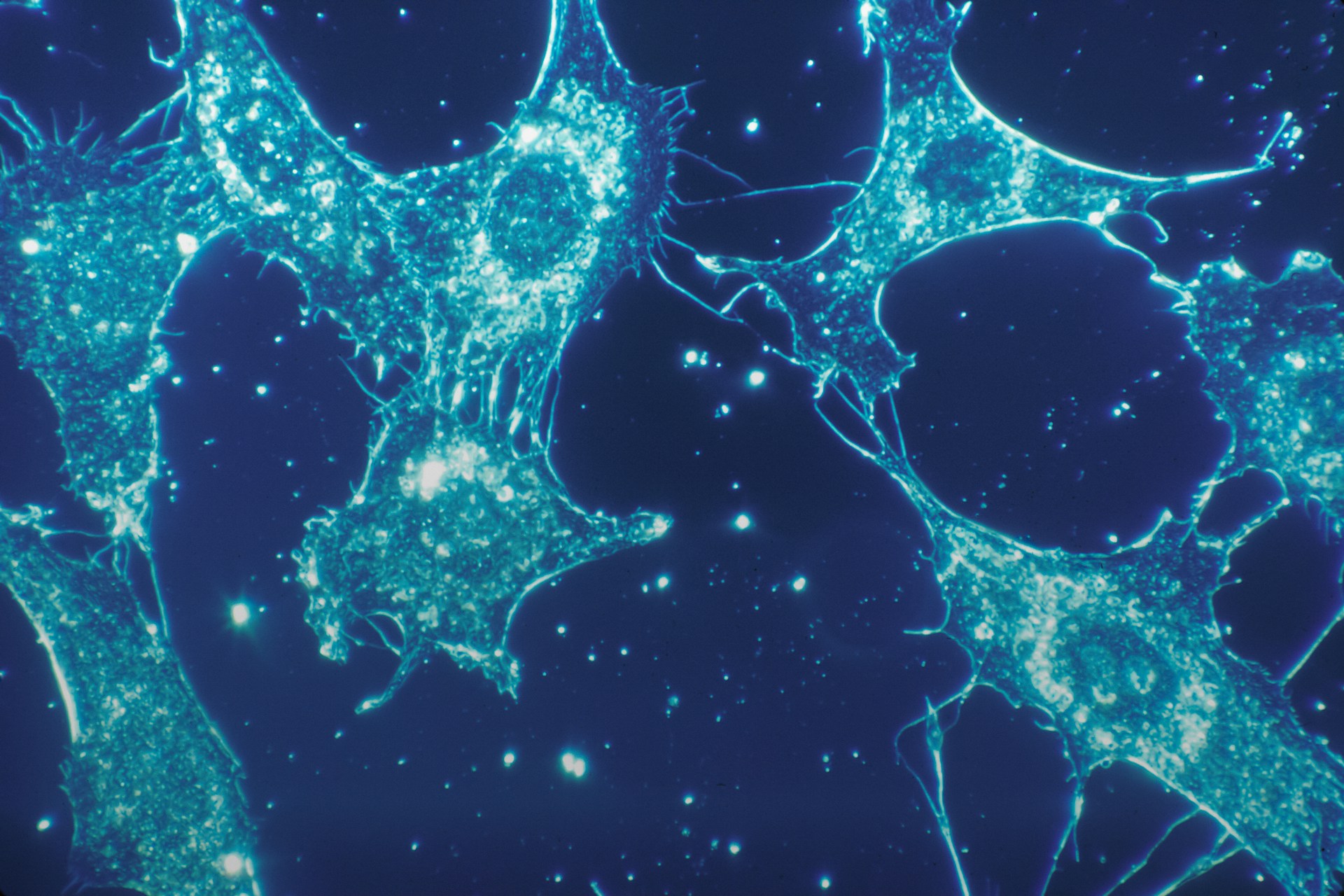
For decades, the global war on cancer has been fought on a specific, deeply entrenched battlefield: the late stage. We have poured astronomical resources, brilliant minds, and cutting-edge technologies into the study of advanced tumors. As a result, the medical community has become an absolute expert in studying the "last cell", a cell that has already accumulated millions of mutations and undergone profound evolutionary changes. Yet, paradoxically, we still know remarkably little about the "first cell."
Article content
As we look toward the future of medicine, a thrilling new frontier is emerging at the intersection of mathematics, physics, and oncology. This paradigm shift, known as mathematical oncology, promises to bring rigorous analytical thinking to some of the most challenging problems in medicine. Cancer is not merely a static collection of genetic mutations; it is a dynamic biological system that evolves over time and across scales, from molecules to cells to tissues and entire organisms. Because of this complexity, mathematical and physical approaches are poised to play an increasingly important role in helping us understand these intricate interactions.
The Danger of Elegance Without Reality
But as we eagerly embrace this beautiful merger of equations and biology, we must heed a critical note of caution based on decades of clinical observation. The greatest limitation in cancer research today is not a lack of sophisticated mathematical models. Rather, it is our stark lack of access to the earliest stages of human cancer biology.
An elegant predictive framework is only as powerful as the biological reality it represents. In an era increasingly dominated by artificial intelligence, this limitation becomes even more acute. If we feed our most advanced machine learning algorithms and neural networks data derived exclusively from late-stage, chaotic tumors, we are simply optimizing our understanding of a reactive system. We are perfecting how we treat established, life-threatening diseases rather than figuring out how to stop them from taking root in the first place.
The true transformation of oncology does not lie in choosing between biology and mathematics, but in seamlessly integrating them. As Dr. Azra Raza, a renowned oncologist and clinical director at Columbia University Medical Center, notes, mathematical and physical models will only truly transform oncology when they are grounded in the biology of the earliest stages of disease. Dr. Raza highlights the urgent need for a global research ecosystem that prioritizes longitudinal human studies and biospecimen repositories, enabling us to observe cancer before it becomes clinically apparent.1 Without this foundation, the most complex equations run the risk of becoming academic exercises, detached from the clinical reality of the patients we intend to save.
Shifting the Paradigm: From Reactive to Predictive
To achieve a true breakthrough, the global research ecosystem must urgently shift its priorities. Ultimately, the most important pivot we must make is not merely moving from qualitative observation to mathematical modeling, but moving from late observation to early observation. We need to transition away from a reactive system that treats established disease to a predictive science that identifies the first signs of danger and enables us to intercept cancer before it becomes life-threatening.2
This requires a massive structural shift. We must build the infrastructure that allows us to observe cancer long before it becomes clinically visible, capturing data at the exact moment a normal cell begins its descent into malignancy.
Once we begin studying cancer at its inception rather than at its endpoint, a whole new world opens up. Mathematics, physics, machine learning, and biology can finally work together to create an entirely new paradigm of prediction and prevention. Instead of using mathematical models to predict how an aggressive tumor might metastasize or resist chemotherapy, we can use those same analytical tools to predict how to keep that tumor from ever forming.
A Call to the Next Generation
Medicine desperately needs thoughtful young physician-scientists who are willing to explore these intersections and challenge conventional assumptions while remaining firmly grounded in human biology and patient care. To turn this paradigm shift into a clinical reality, the global scientific community must focus on three urgent, actionable pillars:
- Establish Early-Stage Human Biospecimen Repositories: The global research community must pivot funding and infrastructure away from late-stage tumor banking and toward longitudinal human studies that capture the molecular transition from a healthy cell to a malignant one.
- Ground Computational Models in Early Biological Reality: Mathematicians, AI developers, and oncologists must ensure that predictive models and machine learning frameworks are trained on early-stage preclinical biological data rather than relying solely on the chaotic, highly mutated genomic data from advanced tumors.
- Cultivate Multidisciplinary Physician-Scientists: Academic institutions must create dedicated educational pathways that train the next generation of clinicians to be equally fluent in complex analytical mathematics and bedside human biology, breaking down the traditional silos between equations and oncology.
We cannot save the tree by only studying its dying leaves; we must look to the roots that allowed it to grow. Cancer does not begin with the tumor that kills; it begins with the single cell that creates. The future of oncology demands that we stop focusing on the final, chaotic chapters of a tumor's evolution and instead use mathematics to decode, intercept, and rewrite the story of the first cell.
Acknowledgement
The Institute for Youth in Policy wishes to acknowledge Andrew Baum for editing this op-ed.
Notes
1: Dr. Azra Raza, MD (Chan Soon-Shiong Professor of Medicine and Clinical Director, Edward P. Evans Foundation MDS Center, Columbia University Medical Center), in personal correspondence with the author, June 3, 2026. [^2]: Raza, personal correspondence.
References
- National Cancer Institute. A Close Up of a Cell Phone with a Blue Background. Photograph. September 13, 2021. Unsplash. https://unsplash.com/photos/a-close-up-of-a-cell-phone-with-a-blue-background-1PpyUZceg_I.
- Raza, Azra, MD. Personal correspondence with the author. June 3, 2026. Author's personal archive.


.jpg)
